
7 Credit Score Improvement Tips That Work
At the kitchen table, a renter compares three credit reports after an apartment denial and circles the same collection account she does not recognize. Same balance. Same collector. Same ugly line on more than one file. That moment feels personal, but credit problems are usually mechanical.
That is where credit score improvement tips stop sounding generic and start becoming useful. You need to know whether the problem is bad data, late payments, high card balances, too many fresh applications, a thin file, or fraud.
There is no overnight switch. Wells Fargo notes that scores generally update monthly, and lenders may use different scoring versions, so the best next step depends on what is actually sitting in your reports and what goal is coming next.
#1 Pull your credit reports and dispute anything wrong
What to look for
Watch This Helpful Video
To help you better understand credit score improvement tips, we’ve included this informative video from The Ramsey Show Highlights. It provides valuable insights and visual demonstrations that complement the written content.
Start with all three reports, not just one. Experian regularly points readers toward getting credit reports from all 3 bureaus, and USAGov separates its guidance into credit reports, credit scores, freezing and unfreezing, and dispute pages for a reason: the files do not always match. Look for wrong balances, late payments you can prove were on time, duplicate collections, accounts that are not yours, unfamiliar addresses, and negative items that appear older than the normal Fair Credit Reporting Act reporting periods — often 7 years, or 10 years for certain bankruptcies. The FCRA also gives you access to free annual reports.
| Common issue | Why it matters | First proof to gather |
|---|---|---|
| Late payment you actually made on time | Direct hit to payment history | Bank statement or payment confirmation |
| Duplicate collection account | Can make one debt look like two | Collection letters and matching account numbers |
| Unknown account or address | Could signal a mixed file or fraud | ID, proof of address, recent statements |
| Old negative item | May be past normal reporting limits | Date of first delinquency or court record |
How disputes work
Under the FCRA, you can dispute inaccurate or incomplete information yourself for free. A bureau generally has 30 days to investigate, and it can stretch to 45 in certain cases, such as when you send new relevant information during the review. Be specific. Identify the exact line item, explain what is wrong, and attach copies rather than originals. If you want a federal checklist beside your notes, the Consumer Financial Protection Bureau’s rebuilding guide is a solid companion. And if anyone offers a CPN, a “new file,” or guaranteed deletions, walk away — the Credit Repair Organizations Act exists partly because consumers can do these repair steps themselves.
If the same mistake appears on more than one report, dispute each file separately.
Quick example
Say that unknown collection from 2022 appears on both Equifax and TransUnion after your landlord screening. You dispute both bureaus, then contact the collector for validation within 30 days of its first notice under the FDCPA. Collection activity on that debt must pause until the collector verifies it, and the law also bars harassment. If the calls turn abusive, you can tell the collector in writing to stop contacting you, aside from the limited notices the law still allows.
Fast, legitimate score improvement often starts with cleaning bad data — not buying a secret template.
#2 Pay every bill on time, starting with the accounts that report to credit bureaus
What it is
Payment history is the long game. Credit cards, mortgages, auto loans, personal loans, and student loans usually report to the bureaus; many rent, utility, and phone payments do not unless you use a reporting program or the account goes to collections. That means when cash is tight, you should first protect the accounts that actually feed the score. Autopay for at least the minimum due, paired with a calendar reminder on your phone, is the cleanest way to avoid a one-day slip.
Autopay plus calendar reminders is the simplest way to avoid a one-day slip.
Why it matters
On-time payments build slowly and missed payments hurt quickly. Wells Fargo notes that scores update on a monthly basis, so you usually will not see a same-week jump after one good payment cycle. That lag frustrates people, especially after a rough stretch, but it is normal. Payment history remains a core part of how credit scores are built, which is why steady months matter more than frantic one-time fixes.
Quick example
If you are juggling a Visa bill, a car note, and a medical invoice on the same Friday, keep the Visa and the car current first if those accounts report and the medical provider does not. Then call the medical office before the due date and ask for a payment plan. That is not gaming the system. It is understanding which payments protect your file right now.
#3 Lower revolving balances before your next application
What it is

Revolving utilization measures how much of your available credit card limit you are using. If one card has a $5,000 limit and a $3,000 balance, that card is sitting at 60% utilization. You can pay every bill on time and still look stretched if the balances reported to the bureaus stay high. If you can swing it, making an extra payment before the statement closes often matters more for near-term scoring than carrying a balance and paying interest.
Why it matters
Utilization is a major score factor, and it often reacts faster than older issues because card issuers report regularly. Wells Fargo notes that higher scores — especially above 760 — may bring more options and better rates on a car loan, mortgage, or home equity line of credit. It also notes that good credit can matter for lower insurance premiums, renting an apartment, and some employer credit checks. When you apply, lenders care about the balances they can actually see.
A simple rule: pay down cards before you chase a higher score number.
Quick example
Imagine you have three cards with $8,000 in combined limits and $5,400 in balances before a mortgage preapproval. Paying one card from $2,200 to $300 and another from $1,800 to $500 does not erase the debt, but it can change what the lender sees on the next reporting cycle. That is often a smarter short-term move than obsessing over an older installment loan that is already fixed-rate and current.
#4 Avoid unnecessary hard inquiries while you rebuild
What it is
A hard inquiry usually shows up when you submit a real application for credit. One inquiry is rarely fatal. Five fresh applications in a scramble can tell a different story. Soft inquiries — like checking your own score or using some prequalification tools — generally do not affect scores the same way. Before you click “apply,” know which kind of pull you are inviting onto the report.
Why it matters
When you are rebuilding, new applications add noise. Wells Fargo also points out that several different score versions exist in the market, so the number in your banking app may not be the same score a lender or landlord uses. One dashboard may show a VantageScore, while underwriting may rely on a FICO version. That gap is why chasing every mailer, store-card offer, or splashy intro APR can backfire when you need clean timing.
If you’re rate-shopping for a mortgage or auto loan, keep applications clustered in a short window.
Quick example
If your car dies and you need financing this month, rate-shop the auto loan in a short burst and skip the furniture promotion, the department-store card, and the extra rewards card for now. Most scoring systems are designed to recognize legitimate rate shopping more sensibly than random new-credit behavior. A week before underwriting is not the moment to add unrelated hard pulls.
#5 Keep old accounts open to preserve your credit history
What it is
Length of credit history tracks how long your accounts have been open and how old they are on average. That is why an old card from 2017 can still help even if you barely touch it. Closing that account can reduce your available credit and chip away at account age at the same time. Two score ingredients can move in the wrong direction together.
Why it matters
Lenders like to see stability. A longer record of responsible use gives context that a six-month file cannot. This does not mean every old card deserves to live forever. If an account has a steep annual fee, lousy fraud controls, or nudges you into overspending, closing it may still make sense. But when an older card has no annual fee, keeping it open is often the safer scoring choice.
If an old card has no annual fee, keeping it open is often safer than closing it.
Quick example
Say you have a no-fee Mastercard opened in 2017 and a newer rewards card opened in 2025. After paying off the older account, you think about closing it because the app is annoying. Keeping that card open with one small recurring subscription and full autopay can preserve history and total limit with very little effort. Sometimes boring wins.
#6 Build a credit file if yours is thin, new, or empty
What it is
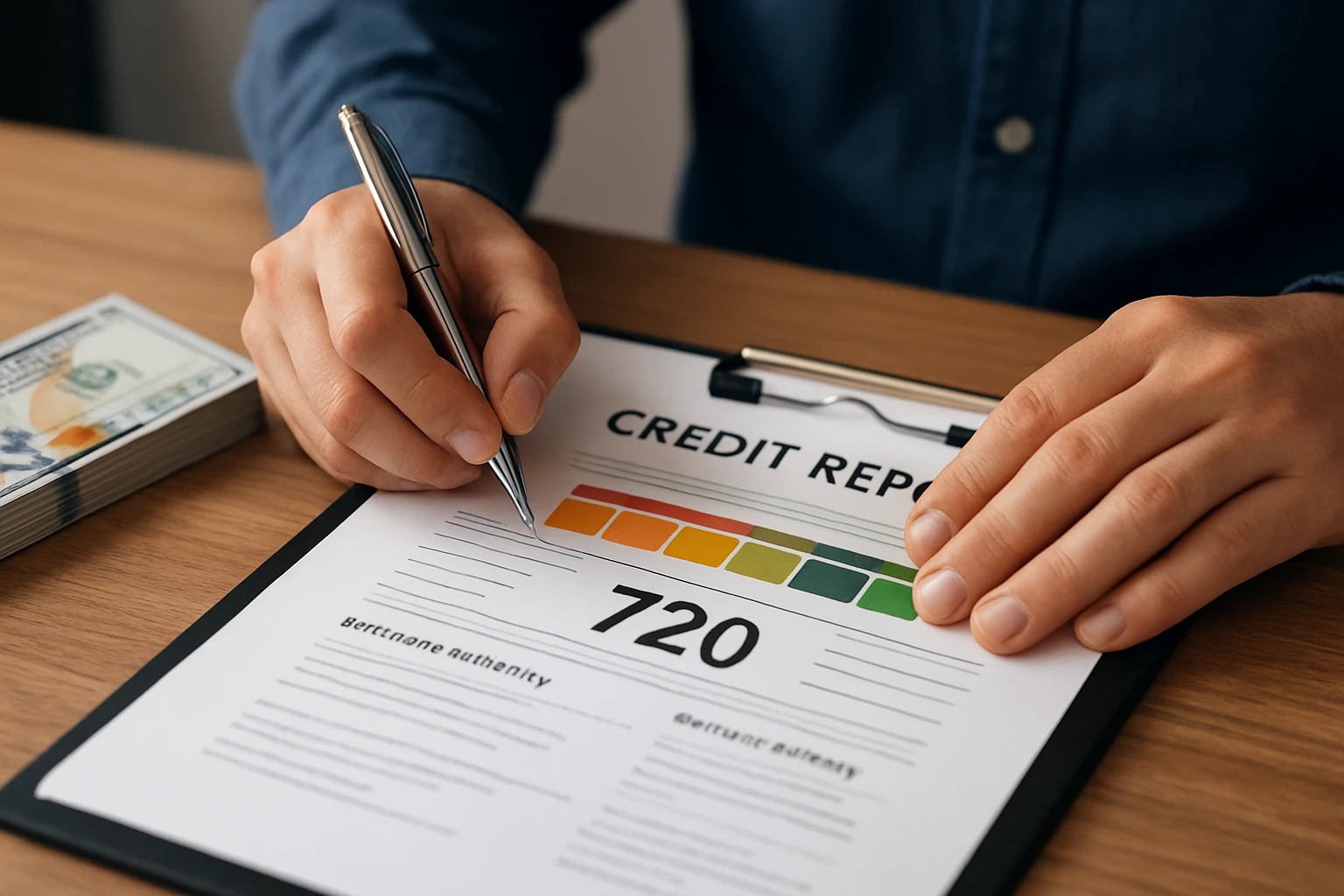
A thin file means there is not much reported data to score. Maybe you are 22, recently divorced, newly arrived in the U.S., or you paid cash for years and never used mainstream credit. In that case, the job is not really repair first. It is creation. Positive behavior has to reach the bureaus through a secured card, a credit-builder loan, rent or utility reporting, or in some cases authorized-user status on a well-managed account. Experian also highlights tools like Boost, qualifying utility-bill additions, and Experian Go for establishing and building credit.
Why it matters
You cannot improve a blank page with determination alone. Thin files also swing more sharply because one new balance or one inquiry can loom larger. Start with reporting-friendly payments before you chase premium rewards cards. And keep the score-version issue in mind: Experian markets Boost as a way some consumer-facing scores can rise instantly, but that does not mean every lender will see the same result. Different models read different data, which is why Experian’s own repair guidance still circles back to consistent, reported habits.
For a thin file, start with reporting-friendly payments before you chase premium rewards cards.
Quick example
A renter with no open tradelines puts down a $300 deposit on a secured card, charges one tank of gas each month, and pays it in full on autopay. She also enrolls a qualifying utility bill in a reporting program. Six months later, there is still no promised point jump, but there is finally a visible pattern of responsible behavior for a lender, landlord, or credit union to review.
#7 Freeze your credit if fraud or identity theft is part of the problem
What it is
A credit freeze restricts access to your report for new credit applications until you lift it. A fraud alert is different: it tells lenders to take extra steps to verify identity. USAGov keeps separate guidance on freezing and unfreezing credit reports, and Experian’s credit hub also covers security freezes and fraud alerts. If someone may be opening accounts in your name, learn these tools before you spend time shaving a few utilization points.
Why it matters
Fraud changes the order of operations. If a thief is creating new hard inquiries or accounts, paying your cards down is not the first priority. Stopping new damage is. A freeze is powerful because most lenders cannot open a new account without seeing the file, and they usually cannot see it while the freeze is active. That makes it one of the strongest first moves after suspicious activity.
A credit freeze blocks new-account access until you lift it, which makes it a strong first move after suspicious activity.
Quick example
You see a wireless-account denial tied to an address in another state, or a Capital One inquiry you never authorized. Freeze each bureau, save the confirmation numbers, review recent inquiries, and dispute the fraudulent items. If you have an FTC identity theft report or police report, keep those documents with your file. Cleanup works better when the leak is closed first.
How to choose the right credit score improvement tips for your goal
Pick the fix that matches the reason your score is stuck; don’t treat every credit problem the same.
| Your situation | Best first move | What can wait |
|---|---|---|
| Mortgage or rental soon | Dispute clear errors and lower card balances | New rewards-card applications |
| Low score driven by debt | Stay current and reduce utilization | Closing old accounts |
| Thin or brand-new file | Add a basic reporting account | Premium cards and large limits |
| Possible identity theft | Freeze reports and dispute fraud | Micro-optimizing balances |
If you need a mortgage or rental soon
If the deadline is 30 to 90 days away, fix what a lender or property manager will see now: obvious report errors, high revolving balances, and stray new applications. Wells Fargo notes that scores above 760 may bring better rates and more options, and good credit can matter for renting as well. Ask the lender which score version they actually use if you can — especially if you are shopping FHA, VA, or conventional mortgage options — because the score in your app may not be the underwriting score. And remember the timing: updates usually hit monthly, not overnight.
If your score is low because of debt
If debt is the real issue, separate cost from scoring. High interest hurts your budget; high card balances hurt how stretched you look to scoring models. So keep every reporting account current, target revolving balances first, and be smart with collections. If a collector contacts you about a debt you do not recognize, use the FDCPA validation window. If the debt is accurate, focus on an affordable resolution and fresh positive reporting instead of sending serial disputes that go nowhere.
If your file is thin or you suspect identity theft
A thin file and a fraud case can both produce low scores, but they need opposite first moves. Thin file? Add clean, reported accounts and let them age. Suspected identity theft? Freeze first, then dispute. USAGov separates its guidance for credit scores, credit reports, freezes, unfreezing, and disputes for exactly this reason. One problem needs more data. The other needs less access.
There is no secret switch here — the best credit score improvement tips fix the actual problem in your file.
Start with errors. Then protect every on-time payment, cut revolving balances before you apply, and freeze the file first if fraud is in the picture. Scores usually move on monthly reporting cycles, and lenders may read different versions of the same story.
If you are sorting through credit score improvement tips this week, which issue deserves your first move: bad data, high card usage, a thin file, or suspicious activity?
Understand Ranges With Credit Score Repair
Get plain-English credit score basics, range breakdowns, dispute steps, rebuilding guides, identity-theft protection advice, and comparison content built for Americans facing errors, debt, low scores, or rental roadblocks.
Educational Disclaimer: This article is for educational purposes only and is not legal, tax, or financial advice. Under the Credit Repair Organizations Act, you can take the same dispute and credit-building steps yourself at no cost. No one can lawfully remove accurate, current, verifiable negative information or promise a specific score increase. If your situation involves litigation, identity theft, or an imminent mortgage closing, talk with a qualified attorney, HUD-approved housing counselor, or financial professional.