
How to Improve Home Improvement Loans Credit Score
You spread three credit reports across a kitchen table, circle a mystery collection with a red pen, and realize the loan you want will depend on what those pages say.
That is where most home improvement loans credit score problems get real. Not when you price a roof. Not when you compare lenders. It happens when your file shows high card balances, an old late payment from 2023, or an account you do not even recognize. The good news: you can improve the picture lenders see before you apply, and you can do it with a method instead of guesswork.
This guide walks through the sequence that usually matters most: check your starting point, clean up errors, lower revolving balances, protect on-time payments, match yourself to the right loan type, then shop offers carefully. We will stay with legal, durable credit habits — not shortcuts, not CPN nonsense, and not promises nobody can honestly make.
Prerequisites / Tools
Pull your starting credit picture
Watch This Helpful Video
To help you better understand home improvement loans credit score, we’ve included this informative video from The Money Guy Show. It provides valuable insights and visual demonstrations that complement the written content.
Before you touch an application, pull your current reports and at least one score source. If you are comparing a personal loan with an FHA 203(k) renovation mortgage, you need to know whether your main issue is accuracy, utilization, thin history, or recent missed payments. A free score can differ from the exact model a lender uses, but it still gives you a working baseline.
Experian’s credit resources include a free credit report, a free credit score, Experian Boost®, dispute tools, fraud alerts, and a security freeze. The Consumer Financial Protection Bureau and Experian both push the same starting point: see what a lender is likely to see before you try to explain it later.
Gather income, debt, and ID documents
A clean application moves faster when you already have your last 30 to 60 days of pay stubs, recent bank statements, last one or two tax returns if you are self-employed, a government ID, proof of address, and a list of monthly debts. Think auto loan, student loan, rent, child support, credit cards, and any buy-now-pay-later payment still hitting your account.
If you end up applying for a renovation mortgage instead of an unsecured personal loan, lenders may look harder at employment history and verifiable income. That is normal. Bigger, property-tied financing usually comes with deeper documentation.
Save dispute, fraud alert, and freeze tools
Keep links, screenshots, and a simple folder ready for disputes, identity verification, and suspicious-account notes. If you have been dealing with a lost wallet, stolen mail, or a strange new inquiry from a lender you never contacted, save the bureau freeze and fraud-alert pages before you do anything else.
Don’t start with the loan form; start with a baseline so you know whether the real problem is errors, utilization, or missed payments.
Under the Fair Credit Reporting Act, you can dispute inaccurate information yourself. Under the Credit Repair Organizations Act, you never need to pay a company to exercise that right. The ads are loud. The law is quieter — and usually more helpful.
Step 1: Check Your Home Improvement Loans Credit Score Before You Shop
Find your current score range
Start with the range, not the exact vanity number. Lenders tend to price in bands. A borrower around the low 600s often faces a different menu than a borrower around 680 or 740, even when income is identical. Bankrate’s overview of what a credit score means is a useful refresher if you want to reset your expectations before you shop.
If you are using a free dashboard, remember the lender may pull a different FICO or VantageScore version. That does not make your starting number useless. It means you should focus on patterns — late payments, maxed cards, collections, short history — instead of obsessing over a single-point swing.
Look for the biggest score drags
Three issues usually rise to the top fast: recent late payments, high revolving utilization, and unresolved derogatory items. A card sitting at 92% of its limit often hurts more than people expect. So does a collection you never noticed because it landed on only one bureau file.
Make a short list with dates and dollar amounts. Example: “Visa ending 4412 — $2,760 balance on $3,000 limit,” “Medical collection — opened May 2025,” “30-day late on auto loan — November 2024.” When you can name the problem precisely, you can pick the right fix.
Match your profile to the loan type
Home-improvement financing is not one product. You might qualify for an unsecured personal loan, a renovation mortgage such as an FHA 203(k), a home-equity product if you have enough equity, or a veteran-friendly option if you have military eligibility. Lenders weigh more than score alone: income, existing debt, property plans, and collateral matter too.
Upstart says borrowers can request $1,000 to $75,000 for home improvement, with APRs from 6.3% to 35.99%. It also says some applicants can check rates in about five minutes without affecting their credit score. That wide APR range tells you something important: a quick quote is useful, but pricing can still swing hard based on your file.
Your target is not just a better score; it’s the score band that opens the loan you actually want.
| What You See on Your File | What It Usually Suggests | Next Move |
|---|---|---|
| High card balances, otherwise clean history | You may improve approval odds quickly with paydown | Lower utilization before prequalifying |
| Errors, mixed file, suspicious collection | Accuracy issue may be blocking you more than score band | Dispute first and freeze if fraud is possible |
| Thin credit or short history | You may need time, a smaller loan goal, or a different product | Add positive payment data and compare structures |
| Recent lates and strained debt ratio | Approval may depend on cleanup and lower obligations | Stabilize payments, reduce balances, then apply |
Step 2: Pull All Three Reports and Fix Errors or Identity-Theft Issues
Check every bureau report line by line
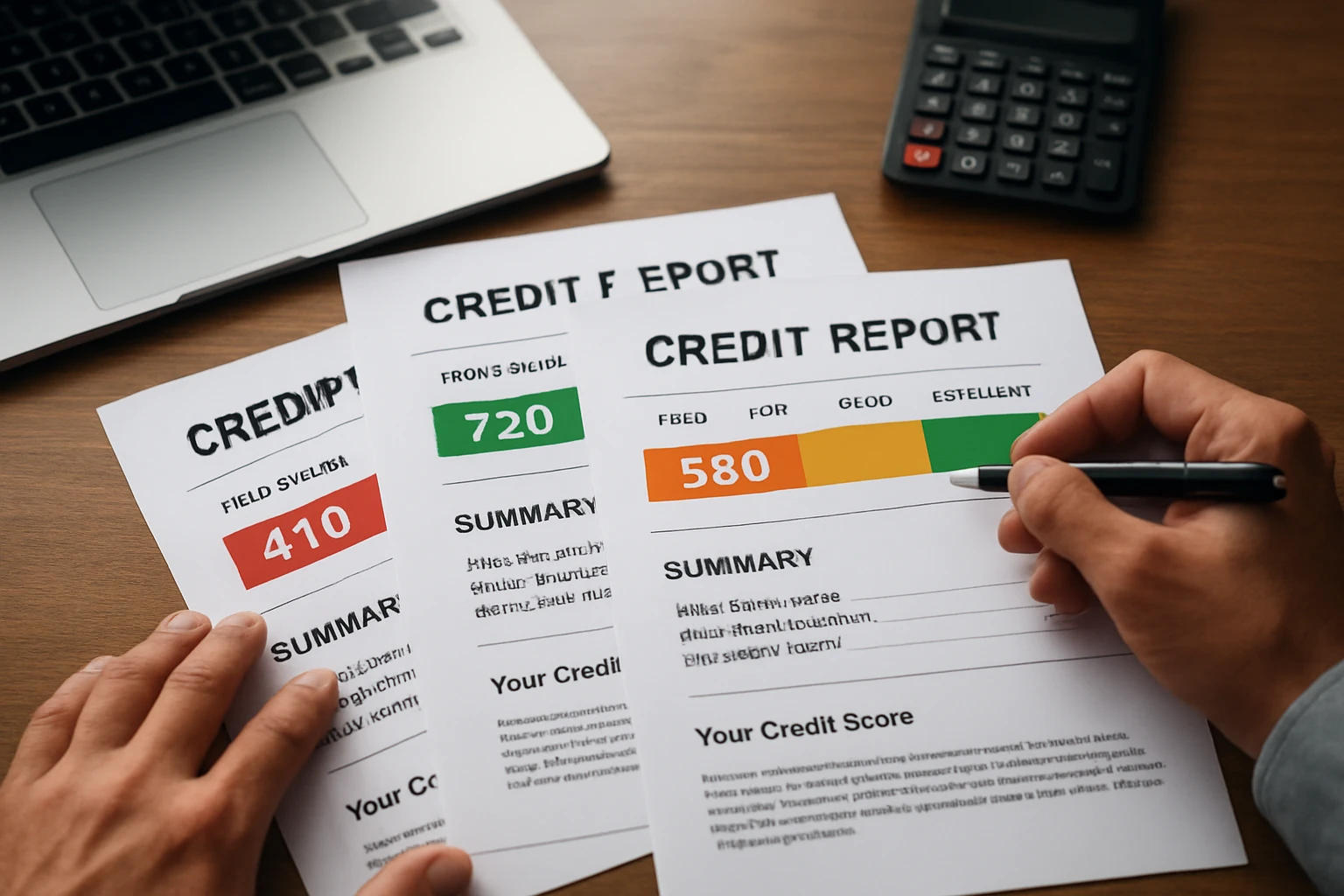
Do not assume one report tells the whole story. Experian, Equifax, and TransUnion can show different dates, balances, and collections. I have seen a borrower miss a single-bureau collection until the week before a contractor deposit was due. That is a lousy time to discover it.
Read each line slowly: names, addresses, employers, account status, payment history, limits, balances, closed dates, and collections. Under the FCRA, you have the right to dispute inaccurate information and to get free annual credit reports. Negative items generally remain up to seven years; some bankruptcies can remain up to 10 years.
Dispute inaccurate or duplicate accounts
If an account is not yours, is duplicated, shows the wrong balance, reports the wrong late date, or lists you as delinquent after a documented correction, dispute it with the bureau and, when appropriate, the furnisher. Attach clean copies of proof — not your only originals. Keep a log with the date you filed, confirmation numbers, and what you sent.
The FCRA usually gives credit bureaus 30 days to investigate, and that can extend to 45 days in some cases, such as when you submit additional relevant information during the investigation. If a debt collector contacts you about a collection you do not recognize, the FDCPA gives you a 30-day window to request validation. If a collector is harassing you, the FDCPA also restricts abusive conduct and allows a written request to stop most communications.
Freeze credit if fraud is a concern
If you spot a new account you never opened or several recent hard inquiries from lenders you never contacted, place a security freeze with each bureau while you investigate. A freeze helps prevent new credit from being opened in your name. It does not erase existing damage, but it can stop a bad situation from getting worse while you work the file.
Experian lists disputes, fraud alerts, and security-freeze tools among its core consumer credit resources. Use them. There is no prize for handling suspected identity theft slowly.
If an account isn’t yours, cleaning it up can be the fastest path to a better-looking file.
Step 3: Lower Revolving Balances and Improve Utilization
Pay cards down before you apply
When people think about improving credit for a loan, they often fixate on old derogatory marks. Sometimes the biggest near-term win is simpler: bring revolving balances down. Credit utilization — how much of your available revolving credit you are using — is a major scoring and underwriting signal. Experian’s education materials keep coming back to this because it shows up so often in real score movement.
Suppose you have two cards: one with a $500 balance on a $500 limit and another with $1,800 on a $2,000 limit. Even if you have never missed a payment, that file looks stretched. Paying those balances down before the statement closes can change what the next report shows lenders.
Keep utilization well below the max
You do not need a magic number, and you do not need zero on every card. You do need breathing room. A card at 20% usage tends to look safer than a card at 95%, and a profile with modest balances tends to look safer than one living on the edge of every limit.
If cash is tight, prioritize the cards that are closest to maxed out. That is often where you get the cleanest visual and scoring improvement first. A $300 payment to a card sitting at 98% can matter more than spreading that same $300 across four low-balance accounts.
Avoid new charges that erase progress
I have watched borrowers make a strong payment on the 5th, then load the same card back up on the 18th for flooring, a water heater, or a medical bill. By the time the statement cuts, the file looks almost unchanged. Your lender will not care that you intended to pay it back next month; they will see the reported balance.
So pause large card spending while you prepare. If you need to buy materials before financing closes, price that into your cash-flow plan. Do not assume “I paid it once” means the bureau will report the lower number you expected.
A small balance drop can do more for your file than waiting months with the same numbers.
Step 4: Build or Preserve Positive Payment History
Turn on autopay or reminders
Payment history is still the heavy hitter. One fresh 30-day late mark can undo a surprising amount of cleanup work. If you are within 60 to 90 days of a home improvement application, set autopay for at least the minimum due or put calendar reminders in two places — phone and email, for example.
Use the simple version if you need to. A recurring bank draft on the 25th and a reminder on the 22nd work better than a perfect system you never maintain.
Keep current accounts current
Do not close a card in frustration because you are tired of looking at it. Do not skip a payment because you are “saving up” for the renovation. Once you are late, you are solving a new problem. Current accounts that stay current help you more than closed accounts that once looked tidy.
If you are catching up after a rough patch — divorce, job loss, medical debt, a 2024 move, a period of reduced hours — stabilize first. Lenders financing a roof replacement or bathroom remodel want to see that the bleeding has stopped.
Add positive data where possible
Experian promotes Experian Boost® alongside its free report and score tools, and many consumers also look for rent-reporting services or credit-builder products when they have a thin file. Those tools do not rewrite serious negatives, but they can add depth over time. For renters, veterans rebuilding after a deployment-related disruption, or consumers starting from very little history, reported on-time payments can strengthen the file gradually.
Be choosy. Only add accounts you can manage comfortably. A small secured card paid on time for 12 months beats a stack of new obligations that create more risk than benefit.
One new late payment can undo more progress than a month of smart fixes.
Step 5: Choose the Loan Type That Matches Your Score
Compare unsecured personal loans
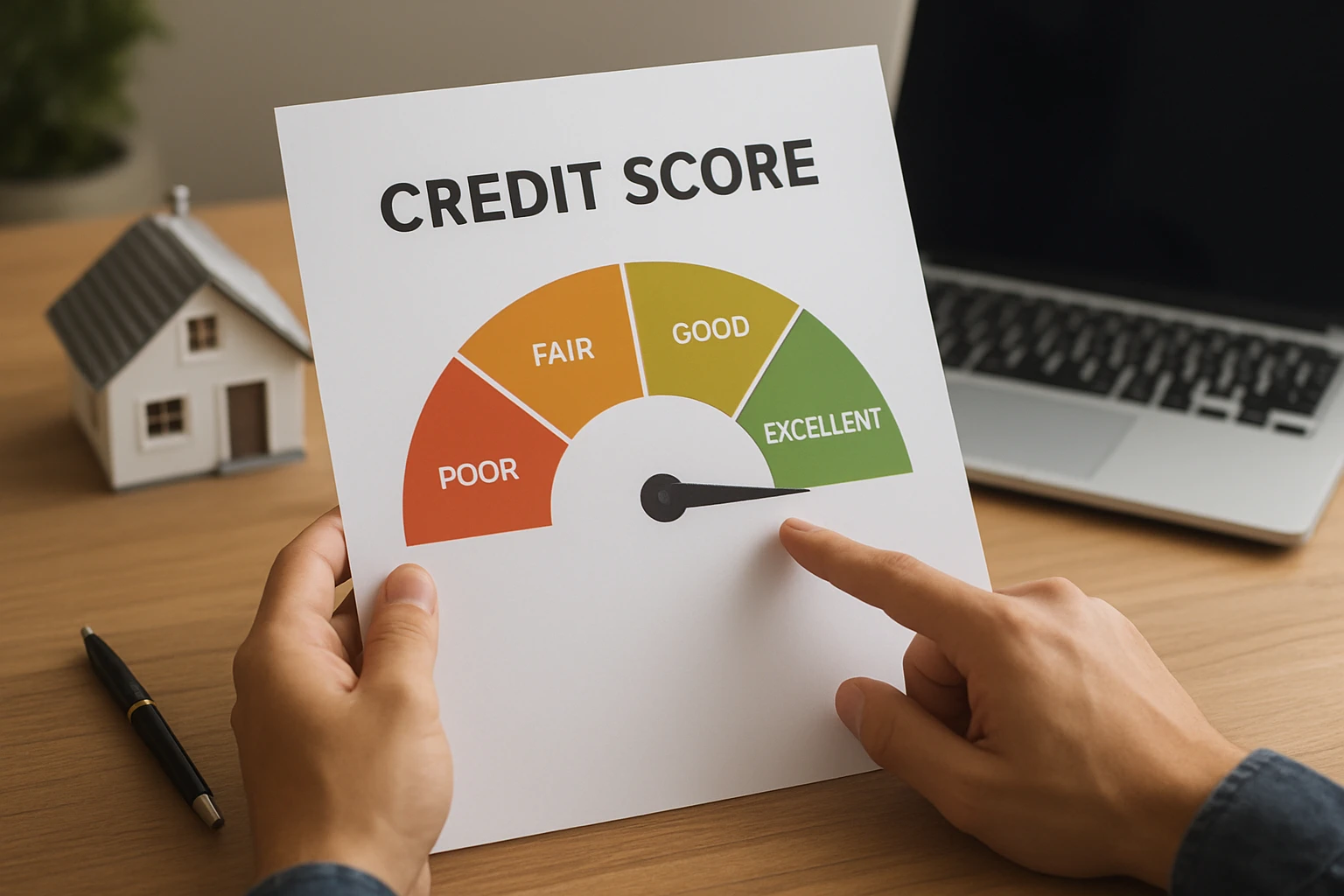
Unsecured personal loans are often the quickest way to finance a smaller or medium-sized project, especially if you do not have home equity. Upstart explicitly notes that its home-improvement personal loans do not require home equity, which is useful when you bought recently or have not built much value yet. Fixed payments and a fast online process can be convenient.
But convenience has a price range. The same excerpt that advertises speed also lists APRs from 6.3% to 35.99%. That spread is the story. Fast funding and easy access are not the same as low-cost borrowing.
Consider FHA 203(k) renovation loans
A renovation mortgage is a different animal. Reliance Mortgage describes the FHA 203(k) as one loan that wraps a home purchase or refinance together with renovation costs — one application, one approval process, one closing, one mortgage payment. If your project is substantial and you qualify, that structure may fit better than stacking high-rate unsecured debt on top of a mortgage.
It is also slower and more document-heavy. Expect income verification, employment history review, and project scrutiny. This is not a weekend deck loan. It is a financing path for larger rehab or purchase-plus-repair plans.
Check veteran-friendly options when relevant
If you have veteran or active-duty eligibility, compare VA-related renovation or equity-based options before defaulting to an unsecured personal loan. Terms, fees, and property rules vary, so you need to compare the full structure rather than grabbing the first fast-funding ad you see.
That matters even if your score is only fair. Sometimes the answer is not “raise the score by 40 points.” Sometimes it is “pick a loan that fits the score and cash flow you already have.”
The right loan can make the same credit score work harder, especially if you don’t have home equity.
| Loan Path | Best Fit | Watch Outs |
|---|---|---|
| Unsecured personal loan | Smaller projects, no equity, need speed | APR can be high; shorter terms can raise the monthly payment |
| FHA 203(k) renovation loan | Purchase or refinance tied to major repairs | More paperwork, slower process, stricter project rules |
| Equity-based or veteran-friendly option | Borrowers with equity or military eligibility | Property and underwriting rules vary; compare total cost carefully |
Step 6: Apply, Rate-Shop, and Time the Application
Prequalify before you hard-apply
Use prequalification wherever it is offered. Upstart says checking your rate takes less than five minutes and does not affect your credit score. That is the right first move because it lets you compare likely pricing before you trigger a hard inquiry.
Soft-pull estimates are not final approval. Still, they help you filter out ugly offers early. If a prequalified rate already looks too expensive, you just saved yourself a needless application.
Use rate shopping to compare offers
When you compare, line up the full cost: APR, origination fee, monthly payment, term length, prepayment policy, and total finance charge. Upstart also says approved borrowers may receive funds as fast as 24 hours. That can matter when a furnace fails in January. It does not automatically beat a slower offer with materially lower cost.
If you are comparing a personal loan with a renovation mortgage, keep the comparison honest. They solve different problems. One is speed-first. One is structure-first. Your job is to decide which one matches the project and the credit file you actually have.
Apply after your credit cleanup is done
Timing matters. Wait until disputes have updated, balances have reported lower, and any recent late risk is under control. I like to see the file settle for at least one reporting cycle after a major paydown, because what you paid and what the bureaus show are not always identical on the same day.
Then narrow your final list and apply with discipline. Shop the rate, choose your best path, and avoid spraying applications across every lender with a glossy ad.
Shop the rate first; save the hard inquiry for the lender you’re most likely to choose.
Common Mistakes
Applying before fixing report errors
This is the big one. If a report shows a wrong collection, mixed-file data, or a fraud account, your application may be judged on a file that should never have existed in that condition. Skipping disputes or a freeze can leave the real problem untouched while you add new inquiries on top of it.
Do not let urgency push you into scams either. CPNs, “sweeps,” and guaranteed-score promises are not lawful credit-building strategies. Under CROA, you can do every dispute step yourself for free.
Chasing speed instead of total cost
A lender advertising fast cash can solve a real emergency. That does not make it cheap. Upstart’s published range of 6.3% to 35.99% is a perfect reminder that speedy funding and affordable funding are separate questions.
Run the monthly payment and total repayment. A $15,000 kitchen fix financed at the high end of the range is a very different experience from the same project financed at a middling rate over a manageable term.
Ignoring smarter loan structures
If you only compare unsecured personal loans, you may miss a better fit such as an FHA 203(k) or a veteran-friendly alternative. Reliance Mortgage’s description of the 203(k) — one loan, one approval process, one closing, one mortgage payment — is not just marketing language. For the right borrower, it describes a fundamentally different structure.
When top search results disagree, the disagreement usually reflects product differences, not bad information. One site emphasizes speed. Another emphasizes long-term structure. Your task is to choose based on score, project size, property plans, and total cost — not whichever headline looks easiest that night.
The biggest mistake is applying before the cleanup is finished.
Clean the file, lower balances, choose the right structure, and apply only when the numbers finally tell your side of the story.
That sequence will not guarantee approval, but it gives your home improvement loans credit score picture a fair shot before you ask a lender to judge it.
What would change your next offer more right now — removing one wrong account, paying a card down this week, or switching to a loan path that fits your file better?
Sharpen Borrowing Odds With Credit Score Repair
Credit Score Repair explains basics, range meanings, disputes, fraud protection, and realistic rebuilding steps for Americans comparing loan, rental, mortgage, or debt options.
Educational disclaimer: This material is for educational purposes only and does not provide legal, tax, financial, or lending advice. Credit standards, scoring models, reporting practices, and loan terms vary by lender and by consumer profile, and no score increase or approval outcome is guaranteed.
You can dispute inaccurate credit report information and take credit-building steps on your own at no cost under federal law. Under the Fair Credit Reporting Act, consumers can dispute errors and obtain free annual credit reports; under the Credit Repair Organizations Act, no company is required for you to exercise those rights. If you need advice about a specific debt, dispute, identity-theft issue, or loan application, speak with a qualified professional, attorney, lender, or HUD-approved housing counselor.