Best Business Credit Score Improvement Tips 2026
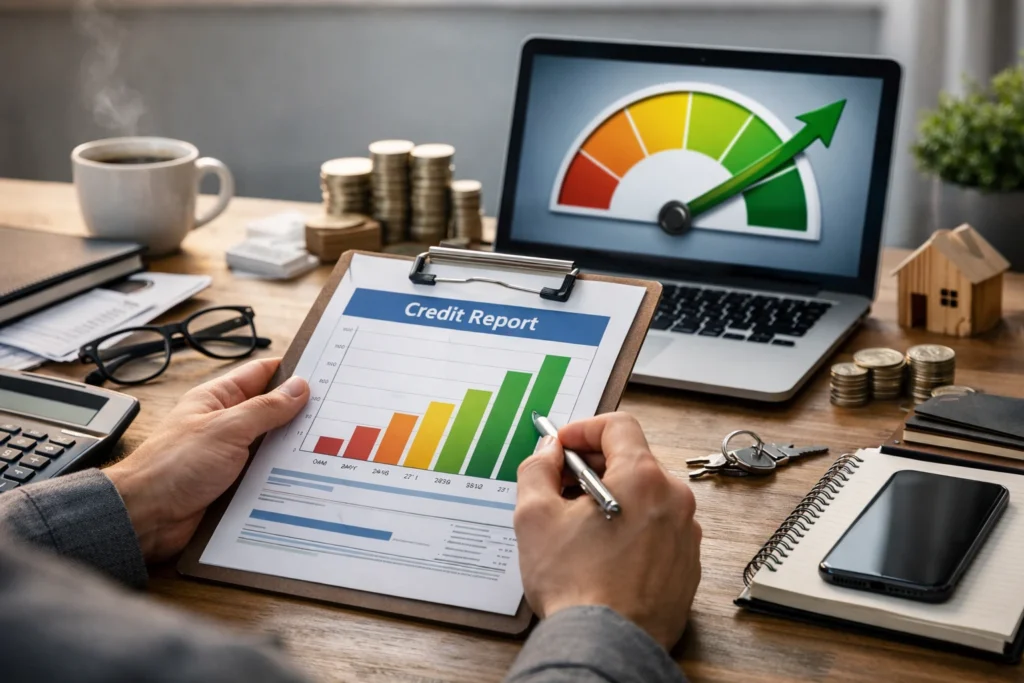
You’re at the kitchen table at 9:17 p.m., three invoices on the left, a printed credit report on the right, and a loan email on the screen asking for two more months of statements before the bank will move forward. That is when business credit score improvement stops sounding abstract and starts looking like paper, timing, and risk.
If you run a new LLC, a side business that turned full-time, or a small company stuck in the “almost approved” lane, this guide is for you. We’re focusing on lender-visible actions only: fixes that clean up bad data, improve payment behavior, reduce financial strain, and make your file easier for a bank underwriter to defend.
Selection criteria: what actually counts as a business credit score improvement tip
Not every credit tip deserves your attention. Some are technically true but too slow to matter. Others sound clever online but do nothing a lender can verify. I rank business credit score improvement tactics by three tests: can a lender see the change, does it reduce risk quickly, and does it help whether your problem is bad data, a thin file, or too much debt?
Watch This Helpful Video
To help you better understand business credit score improvement, we’ve included this informative video from Marvin Francois. It provides valuable insights and visual demonstrations that complement the written content.
What lenders can verify
Lenders care most about what shows up in records, statements, and reports they can pull themselves. Experian’s small-business offerings include Business Credit Reports, BusinessIQ, Smart Business Reports, and Supplier Check Reports. That list matters because it reminds you that your business can be viewed through more than one lens. A banker may also use internal scoring, your financial statements, and your personal credit if you signed a guarantee.
What moves risk fastest
The fastest improvements usually come from correcting wrong information or tightening payment behavior. Thomas Gilman notes that many bank underwriters and risk departments use an internal business credit scoring system on a 1-to-10 scale, with 1 best and 10 worst. In that framework, a low 5 or better is described as bankable. Your bank may use a different model, but the lesson holds: the bank is trying to decide how risky you look right now, not how hard you are trying.
What helps both new and established businesses
A good tip should work whether your company is six months old or six years old. A thin file needs clean data and reporting accounts. An older business may need better cash flow, less debt, or a stronger revenue mix. The best advice helps both groups by changing the evidence a lender sees — not just your intentions.
If a tip does not change what a lender can verify, it is not a real credit improvement strategy.
| Tip | What a lender can verify | Likely speed | Best when |
|---|---|---|---|
| Audit reports | Wrong addresses, accounts, duplicates, bad ownership links | Fast if errors exist | Your file looks inaccurate or unusually thin |
| Pay early | Payment timing and consistency | Fast to moderate | You already have open accounts that report |
| Strengthen personal credit | Owner credit profile for guaranteed debt | Moderate | The business is new or the lender reviews both files |
| Reduce debt and improve liquidity | Balances, statements, cash position | Moderate | You look stretched month to month |
| Diversify revenue | Deposit patterns and customer concentration | Moderate to slow | One client drives most of your income |
| Use collateral or guarantees | Support for borderline approvals | Fast for decisioning | You are close to approval but not over the line |
#1 Audit your business credit reports and dispute errors
What it does: cleans up the data before you try to “build” on top of it. Best for: owners dealing with report errors, identity-theft fallout, or a thin file dragged down by one bad item.
Pull every report you can access
Start with the business records lenders or suppliers may actually review. Experian Business Credit Reports and Supplier Check Reports are examples of the kinds of files worth checking. If your lender also asked for a personal guarantee, review your personal consumer reports too. For consumer credit, the CFPB’s rebuilding guidance is a solid plain-English reference, and federal law gives you access to free annual reports.
Look for wrong addresses, accounts, and duplicates
Do not just scan for obvious late payments. Verify the legal business name, DBA, EIN linkage, addresses, phone numbers, and tradelines. Then look for:
- accounts that do not belong to you,
- duplicate negative items,
- wrong balances or payment status,
- outdated addresses that tie you to old problems,
- identity-theft accounts or mixed files.
On a thin report, one wrong delinquency can dominate the whole picture. I’ve seen small files with three reporting accounts where one bad line set the tone for everything.
Dispute the items that distort your profile most
Go after the items that most affect perceived risk first: active delinquencies, incorrect ownership links, duplicate derogatories, and bad balance data. Keep copies of invoices, contracts, bank statements, canceled checks, and emails. If your personal consumer reports are involved, the Fair Credit Reporting Act generally requires an investigation within 30 days, or up to 45 in some cases. Business bureaus do not always follow identical procedures, so read each bureau’s dispute process carefully. And if a collector is chasing you over a personally guaranteed account, the Fair Debt Collection Practices Act gives you a 30-day validation window to request proof.
Fix the file before you try to grow it; clean data is the fastest credibility win.
One more reality check: under the Credit Repair Organizations Act, you can do every dispute step yourself for free. That does not make the work fun, but it does make the economics clear.
#2 Pay vendors and lenders early, not just on time

What it does: improves your payment signal where behavior matters most. Best for: anyone with open accounts who wants the fastest behavior-based way to look less risky.
Build a payment calendar
“I usually pay on time” is not a system. Build a calendar that shows invoice date, due date, planned pay date, and a buffer date. Thomas Gilman advises paying on time and says it is best to pay at least 10 days early. That early window matters because it creates room for normal business chaos — a customer pays late, a bank hold posts, or payroll lands a day sooner than expected.
Prioritize the accounts that report
Paying early only helps your file if the account’s behavior can be seen somewhere that counts. Start with lenders, vendor tradelines, and suppliers that report. An early payment to a non-reporting vendor may help the relationship, which is still useful, but it may not change the credit picture. This is where business owners waste time: they improve habits that nobody underwriting the deal can verify.
Use early payments to create margin
Early payment is not just about optics. It supports cash discipline. Gilman also points to positive cash flow and strong liquidity as signals that improve business credit positioning. When you pay early, you stop living on the exact due date. That creates cleaner bank statements, fewer last-minute transfers, and less chance of looking stretched.
On-time is the minimum; early payment is the cleaner signal.
If you want one practical rule, use this: every Friday, review the next 21 days of obligations. That single habit catches more trouble than most expensive dashboards.
#3 Strengthen personal credit if you are personally on the hook
What it does: improves the part of the file many lenders still review alongside the business. Best for: sole proprietors, newer businesses, and owners signing personal guarantees.
Know when personal credit still matters
If you personally guarantee the debt, your personal credit is part of the business story whether you like it or not. That is especially true for newer firms, owner-operated service businesses, and companies with thin business files. Thomas Gilman describes 700+ personal credit as ideal in this context. Not every lender uses that exact threshold, but it tells you the direction lenders prefer: stable, predictable, low-drama consumer credit.
Separate business and personal spending
Open and use a dedicated business bank account. Use a business card for business purchases. Reimburse yourself deliberately instead of mixing charges. When spending runs through the wrong account, your statements get muddy fast. A lender reviewing two months of deposits and card activity should not have to guess whether the Saturday grocery run was household spending or job-site supplies.
Aim for lender-friendly personal credit habits
Pay on time. Keep balances manageable. Avoid stacking new applications right before a business loan request. Review your personal reports for errors just as carefully as your business file. Also, stay skeptical of quick-fix sales pitches. Accurate negative items on consumer reports generally do not vanish because somebody sold you a template. Most negative consumer information can remain for up to seven years, and some bankruptcies can stay for up to 10. Skip CPNs, sweep scams, and any promise that sounds like a shortcut around the law.
If you personally guarantee the debt, your personal score is part of the business story.
#4 Reduce debt and protect cash flow
What it does: lowers strain and improves how your business looks on paper and in statements. Best for: companies carrying too much debt or operating with no room for error.
Lower revolving debt
High balances on business cards or lines make you look busy, but they can also make you look brittle. Start by attacking the most expensive revolving debt and the balances that rarely come down. A lender does not love seeing a line that sits near the ceiling month after month. Even if you have never paid late, that pattern can suggest you are using credit to bridge routine operating gaps.
Keep liquidity visible
Gilman specifically calls out strong liquidity as a positive signal. That means cash and near-cash resources you can actually access, not optimism. Keep an eye on average balances, not just end-of-month snapshots. Separate tax money and payroll reserves so your operating cash is easier to interpret. If your banker sees stable balances instead of a roller coaster, you instantly look more manageable.
Avoid looking stretched month to month
Underwriters often review statements, not just scores. Repeated overdraft risk, frantic transfers between accounts, and payments timed to the last possible day can work against you even when the formal score is decent. A simple 13-week cash flow forecast is boring. It is also one of the better ways to stop surprises before they reach your lender.
Liquidity is a credit signal, not just an accounting detail.
A contractor in Dallas with $80,000 in receivables can still look weak if there is only $1,900 left in the account every month before collections arrive. Cash timing tells a story.
#5 Diversify revenue sources and reduce concentration risk

What it does: makes your business look sturdier and less dependent on one fragile relationship. Best for: companies that rely heavily on one client, one channel, or one recurring payment stream.
Spread income across more than one source
Gilman includes revenue diversification for a reason. A business can show decent deposits and still worry a lender if one customer drives most of them. If 70% of your income comes from one national account or one local general contractor, one lost contract can change everything fast. You do not need 200 customers. You do need more than one pillar holding up the roof.
Show steadier month-to-month performance
Think in patterns, not one-time spikes. Add a second channel, a maintenance plan, a smaller recurring service, or a wholesale stream that softens slow retail months. A two-person design studio in Denver might pair large project work with monthly retainer clients. That shift does not just help cash flow; it makes future cash flow easier to believe.
Make the business look less fragile
Lenders worry about concentration risk because a single lost customer can hit cash flow overnight. That is common sense, not banking jargon. When deposits arrive from multiple customers over time, the business looks more resilient and less exposed to one decision-maker on the other side of a contract renewal.
One big customer can make a business look stronger than it really is.
#6 Use collateral or guarantees when the file is borderline
What it does: adds support when you are close, but not quite there. Best for: borrowers who are near approval and need one more layer of comfort for the lender.
Know when collateral helps
Collateral can improve the structure of a deal even when it does not “fix” the underlying file. Equipment, titled vehicles, receivables, cash-secured accounts, and sometimes real estate can reduce lender anxiety if they are easy to value and document. This matters most when the business is not a clean yes or a clear no.
Use guarantees strategically
Gilman suggests offering collateral or guarantees if needed, and he frames the goal as becoming bankable — targeting a low 5 score or better in that 1-to-10 internal scoring context. If your lender sees the file as borderline, extra support can tip the decision. Just remember what a guarantee does: it does not erase weak payment patterns or thin cash flow. It shifts some risk back onto you.
Treat this as support, not a shortcut
Bring current financials, clean statements, and a clear explanation of what changed. If you need collateral because the numbers still look shaky, say so plainly and show the improvement plan. Underwriters prefer a stable borrower with modest support to a chaotic borrower with a shiny asset list.
Collateral can open the door, but it does not replace weak fundamentals.
How to choose the right business credit score improvement tip
Match the fix to the problem in front of you. The usual order is simple: fix errors first, then tighten payment behavior, then deal with leverage and liquidity, then use support terms if you are still borderline. No single score runs the room. Banks, suppliers, and other creditors may look at different reports, statements, and internal models.
Choose by your biggest obstacle
If your file is wrong, start there. If the file is accurate but thin, focus on payment behavior and reporting accounts. If the problem is high debt or erratic cash, do not hide from that by obsessing over tiny report details. A lender cares more about a genuine weakness than a cosmetic fix.
Choose by your timeline
Need movement in the next 30 to 60 days? Audit errors, dispute material inaccuracies, and pay reporting accounts earlier. Have six to 12 months? Debt reduction, stronger liquidity, and revenue diversification become more realistic. If the bank is already in underwriting, short-term behavior and documentation usually matter more than slow structural changes.
Choose by what the lender is likely to see
Thomas Gilman’s 1-to-10 internal scoring example is useful because it reminds you that lenders build their own risk view. A low 5 or better may be bankable in that framework, but the path there can differ. If your lender reviews a personal guarantee, that 700+ personal-credit target matters. If the lender is heavily focused on statements, debt load and liquidity may matter more than one extra tradeline.
Start with the fix that can move a lender-facing number in the next 30 to 60 days.
| If this is your obstacle | Start here | Why this is first | What may change fastest |
|---|---|---|---|
| Wrong or mixed data | Audit reports and dispute errors | Bad data distorts the whole file | Risk perception |
| Open accounts, average payment habits | Pay early | Behavior is easy to verify | Payment profile |
| New business, personal guarantee required | Strengthen personal credit | The owner file is part of underwriting | Personal risk view |
| Heavy balances or thin cash cushion | Reduce debt and protect liquidity | Statements can kill approval even with decent scores | Bankability |
| One-client dependence | Diversify revenue | Concentration risk makes income less believable | Stability story |
| Borderline approval | Use collateral or a guarantee strategically | Adds support when fundamentals are close | Approval odds, not magic score repair |
One contrarian point: if the lender already asked for more documents, stop chasing hacks. Bring cleaner evidence. That usually means updated statements, organized receivables, accurate reports, and a payment pattern that looks calm instead of desperate.
Business credit score improvement gets easier when you work in lender order, not internet-hack order.
Clean the file, show early payments, strengthen personal credit if you signed, then improve debt, liquidity, revenue mix, and support terms. That sequence changes what a lender sees instead of just making you busier.
Which step on your desk right now would change a banker’s first impression fastest?
Know Where You Stand With Credit Score Repair
Get plain-English score basics, range explanations, dispute guidance, rebuilding steps, and credit improvement help for smarter credit decisions across borrowing, renting, and recovery.
Educational disclaimer: This article is for educational purposes only and does not provide legal, tax, accounting, or financial advice. No strategy discussed here can guarantee score increases, financing approval, or better loan terms.
Under the Credit Repair Organizations Act, consumers can perform credit repair steps themselves for free. If your lender also reviews personal credit, consumer reports are generally governed by the Fair Credit Reporting Act, which usually requires investigations within 30 days, or up to 45 in some cases; debt collectors are also subject to validation and conduct rules under the Fair Debt Collection Practices Act.