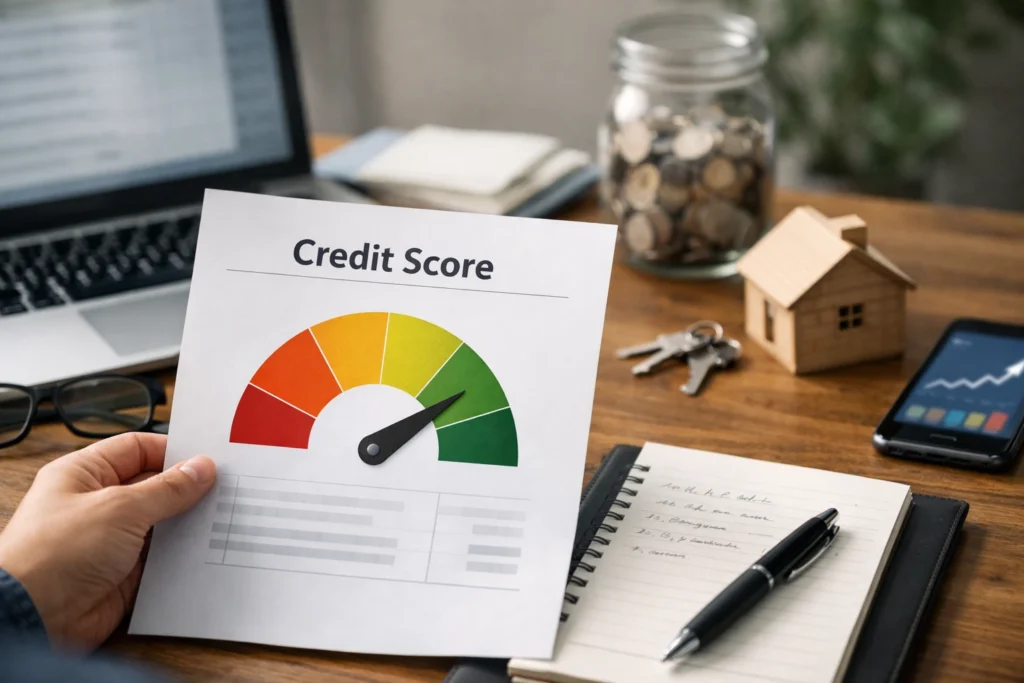
What Is a Good Credit Score Range?
The apartment application is due by 5 p.m. A couple sits at the kitchen table with a laptop, a calculator, a cup of coffee gone half cold, and a credit report spread open between them. One number keeps pulling their eyes back: the score.
If you are asking what is a good credit score range, the short answer is this: it usually means you are in the upper-middle part of the scale, often above fair and below excellent. But the exact cutoff depends on the scoring model. A lender may look at FICO, VantageScore, or an industry-specific version built for mortgages, auto loans, or credit cards.
That is why the same person can look “good” in one app and only “okay” in another. You do not need a perfect 850. You do need to know where your score sits, what is shaping it, and what actually moves it.
What is a good credit score range?
A good credit score usually falls in a range that signals lower risk to lenders, but there is no single universal cutoff.
Watch This Helpful Video
To help you better understand what is a good credit score range, we’ve included this informative video from TruFinancials. It provides valuable insights and visual demonstrations that complement the written content.
What the 300-850 scale tells you
Most credit scores range from 300 to 850. Higher numbers generally suggest that your credit history shows more reliable borrowing behavior. Lower numbers tend to reflect recent late payments, higher balances, shorter history, or serious negative marks.
Many consumers use a FICO-style benchmark when they talk about “good” credit. That common view looks like this:
| Band | Common FICO-Style Range | What It Usually Suggests |
|---|---|---|
| Poor | 300-579 | Higher risk, fewer approvals, and costlier terms |
| Fair | 580-669 | Possible approvals, but often with tighter terms |
| Good | 670-739 | A stronger approval profile for many mainstream products |
| Very Good | 740-799 | Better odds of favorable pricing and broader options |
| Excellent | 800-850 | Top-tier profile, though never a guarantee |
That table is useful, not sacred. It is a guidepost.
Why “good” is not one universal number
FICO and VantageScore often use the same 300-850 overall scale, yet they do not always label ranges the same way. Then lenders add another layer. A card issuer might use FICO 8. A mortgage lender may rely on older mortgage-specific FICO versions. A landlord screening service may blend report data with its own internal criteria.
There is no single magic number that every lender uses.
That is why two people with a 690 can get very different results. One may have 12 years of clean history and low balances. The other may have three recent late payments and two maxed-out cards. Same headline number. Different story underneath.
How to think about fair, good, and excellent
Think of the bands as access levels, not moral grades. Fair usually means you may still qualify, but the terms may cost more. Good is the zone where approvals and pricing often start to improve. Excellent gives you the widest menu of options — not a trophy, and not a promise.
If you are new to credit, remember one detail that surprises a lot of people: it generally takes at least 6 months after opening your first credit account to establish a score. So if you have no score yet, that is not the same as bad credit. It may just mean your file is thin.
Don’t chase 850. Chase clean reports, on-time payments, and room on your limits.
Why does a good credit score matter?
A stronger score can change both what you qualify for and what it costs you to borrow, rent, or move forward after a setback.
How it can affect renting
Your credit score may affect how much you pay for rent. In the real world, that often shows up through approvals, deposits, cosigner requests, or extra documentation. A landlord in Dallas or Philadelphia might care less about the number itself than about recent collections, but the score still acts as a shortcut signal.
If your file is stronger, you may face fewer questions. If it is weaker, you might still get the apartment — just with a larger deposit, a guarantor, or more scrutiny. Local rules can change what landlords are allowed to consider, so the exact process varies.
Why lenders care about the number
Lenders use credit scores because they need a fast way to estimate risk. The score helps them decide whether to approve an application, what limit to offer, what rate to charge, and how much documentation to require. Mortgage lenders, in particular, commonly use credit scores as part of both approval and pricing decisions.
A better score does not guarantee approval, but it can change the terms you’re offered.
That last part matters. Approval is one question. Price is another. You can get a “yes” and still pay far more than someone with a cleaner file.
Where a stronger score may save money
Mortgages make the cost difference easy to feel. On a 30-year home loan, even a modest rate gap can change your monthly payment for years. Auto loans and personal loans work the same way. Credit cards do too — only the damage often hides in a high APR and long payoff window.
A good credit score can also improve your chances when applying for loans, credit cards, and housing. You are not just aiming for a prettier number on a screen. You are trying to reduce friction and expense in ordinary life.
A score is not your whole financial life — but it can become the price tag attached to it.
How does a credit score work?
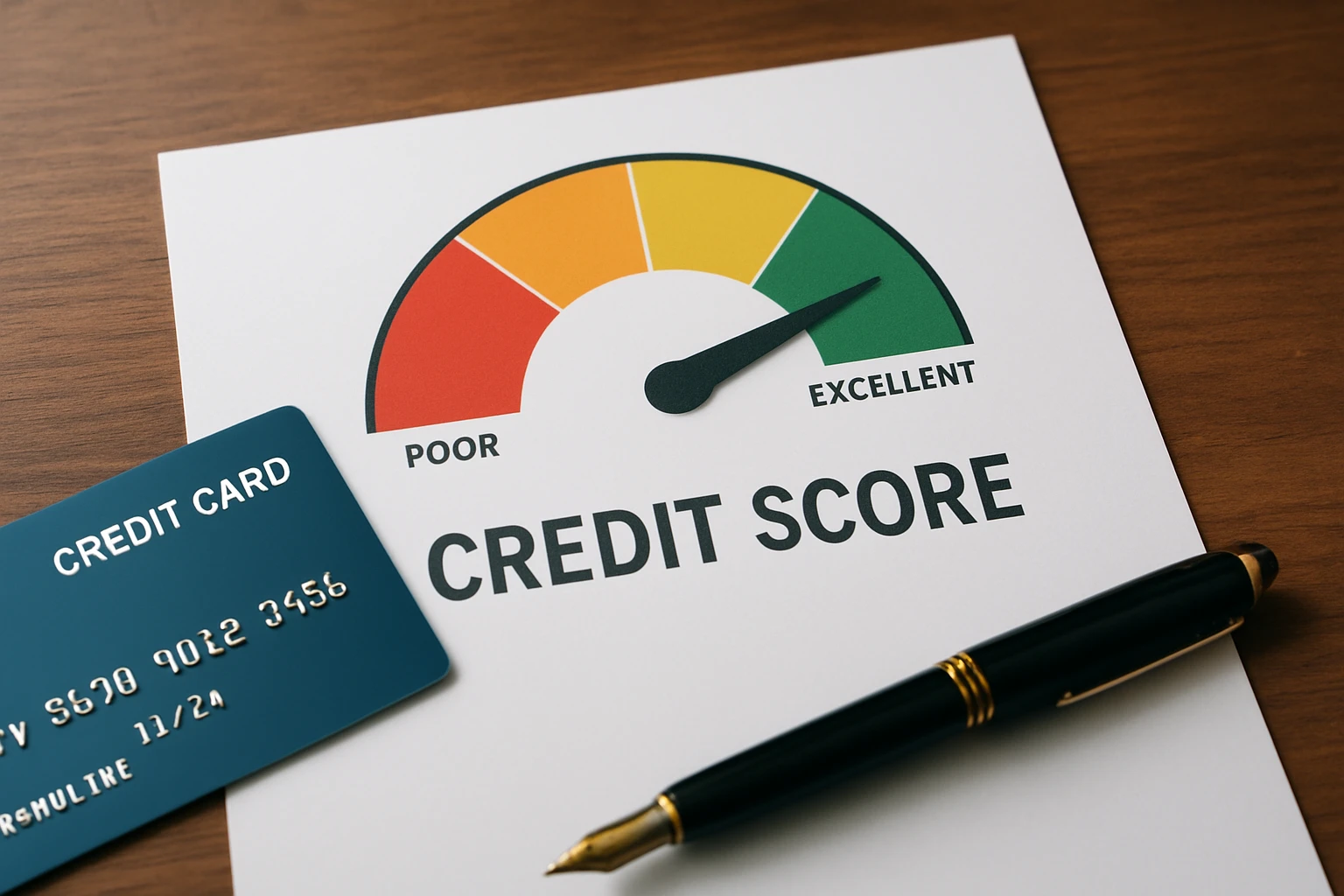
Credit scores are calculated from the information in your credit reports, and a few categories matter much more than the rest.
The five biggest FICO-style factors
One classic FICO-style breakdown, highlighted in Discover’s explainer, looks like this:
| Factor | Share In The Classic Breakdown | What It Usually Reflects |
|---|---|---|
| Payment history | 35% | Whether you paid on time, plus the severity and recency of delinquencies |
| Amounts owed | 30% | Balances, especially revolving utilization on credit cards |
| Length of credit history | 15% | Age of your oldest account and average age across accounts |
| Credit mix | 10% | Whether you manage different account types, such as cards and loans |
| New credit inquiries | 10% | Recent hard inquiries and newly opened accounts |
Treat those percentages as a practical map, not a precise formula. Scoring models are proprietary, and different versions can weigh behavior differently. Still, the pattern is clear: payment history and balances do most of the work.
Why payment history matters most
Payment history makes up the biggest share in that breakdown — 35%. A single 30-day late payment can hurt more than many people expect, especially if your file was strong beforehand. A 90-day late, collection, charge-off, or bankruptcy can weigh much more heavily.
Time helps, but it is slow. Many negative items can generally remain on your reports for up to 7 years, while some bankruptcies can remain for up to 10 years. That is one reason recent damage often feels so sharp: the model sees it as fresh evidence.
If a collector contacts you about a debt you do not recognize, the Fair Debt Collection Practices Act gives you a 30-day window to request validation. Save everything — letters, emails, call logs, screenshots, account statements. Paper trails win arguments.
If you want the biggest impact, start with payment history and balances.
How balances and inquiries influence the number
Amounts owed account for 30% in that same breakdown. For credit cards, this often shows up as credit utilization: how much of your available revolving credit you are using. If you have a $1,000 limit and a $900 statement balance, that 90% utilization is loud. If you owe $900 across $10,000 of total limits, the signal is usually much softer.
New credit inquiries matter too, but less. They are 10% in Discover’s breakdown. One hard inquiry is rarely a crisis. A string of fresh applications in a short stretch can raise more concern because it may suggest stress, shopping, or both. Length of history and credit mix finish the picture, which is why an old, clean card account can be more valuable than it looks.
Your credit score is determined by factors including payment history, credit utilization ratio, and length of credit history. None of that is glamorous. It is mostly pattern recognition.
What habits help move a score into the good range?
Simple, repeatable habits usually do more than dramatic “fixes,” because they improve the same core factors scoring models already care about.
Pay every bill on time
This is the biggest habit. Set autopay for at least the minimum on every open account, then check the account manually so you still catch billing errors or fraud. One missed due date on a small balance can matter more than months of careful balance management elsewhere.
Discover specifically points to paying your bills on time as a good credit habit. That lines up with what anyone who has reviewed real reports already knows: late marks do the damage fast.
Keep credit use under control
Because amounts owed are such a large part of the score, balances matter a lot. If you are trying to improve quickly, start with the card showing the highest utilization percentage. A card maxed at $900 on a $1,000 limit is usually a bigger scoring problem than $2,500 spread across several higher-limit cards.
You do not need to carry a balance to build credit. That myth is expensive. Use the card, let manageable activity report, and pay on time. Good credit habits also include limiting your credit use, which is another point Discover highlights.
Don’t try to fix everything at once; fix the biggest drag first.
Be selective about new applications
If you are rebuilding, slow down before opening new accounts. New credit inquiries are a smaller factor than payment history or balances, but they still matter. Each hard inquiry may have some effect, and too many new accounts can lower your average account age.
Choose new credit because it fits a plan, not because a mailer or social video promised a miracle. Also skip illegal shortcuts. CPNs, “credit sweeps,” and fake identity files are not repair strategies. Under the Credit Repair Organizations Act, you can do every legitimate credit-repair action yourself for free. If you pay for help, pay for education, organization, or convenience — not fantasy.
What if my credit score is low, missing, or wrong?
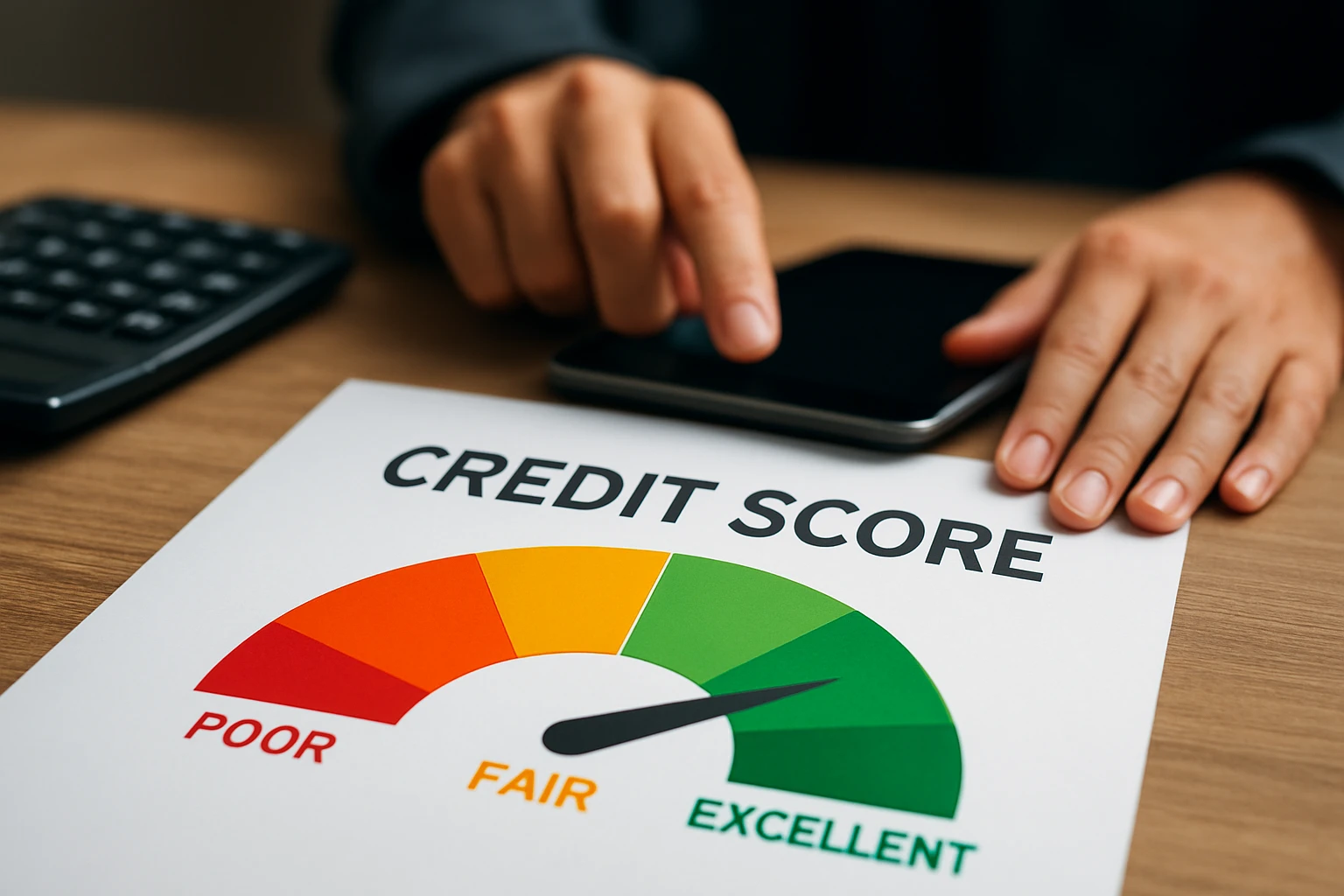
Low, thin, and inaccurate credit files are different problems, and each one calls for a different response.
What a first credit score usually looks like
You do not begin adulthood with a built-in score waiting in the background. It usually takes at least 6 months after opening your first credit account to establish one. Once that score appears, it can land anywhere in the model’s 300-850 range because there is still very little data supporting it.
A thin file is sensitive. A college student with one secured card and a $300 limit may show a decent early score after six months of perfect payments. Miss one due date, though, and the swing can be sharp because there is not much positive history to absorb the hit.
How to tell no credit from bad credit
No credit means there is not enough recent information to generate a score. Bad credit means there is enough information, but some of it signals higher risk — late payments, heavy utilization, collections, or other serious negatives.
No credit is not the same thing as bad credit.
If you are starting from zero, basic tools may help: a secured card, a credit-builder loan, or authorized-user status on a well-managed account. If you are recovering from damage, the first job is different. You need to clean up errors, get current where possible, and shrink balances before you worry about chasing premium products.
What to do if an error or fraud is hurting you
Start by pulling your reports and checking every line. Look for wrong late payments, duplicate collections, mixed files, unfamiliar hard inquiries, or balances that do not match your records. If the data is wrong, the score built on that data can be wrong too.
Under the Fair Credit Reporting Act, credit bureaus generally must investigate disputes within 30 days, with some situations extending to 45 days. You also have the right to free annual credit reports. A practical place to begin is the CFPB’s guide on reviewing and rebuilding credit.
If identity theft is part of the problem, place a fraud alert or freeze, contact the affected lenders, and keep a dated record of every step. If a collector is pursuing a debt that is not yours or does not look right, request validation in writing within 30 days under the FDCPA. The law also restricts harassment and gives you tools to limit collection contact. Correcting inaccurate or fraudulent information can improve your score over time because the scoring model only reads the file in front of it.
How can you check whether you’re on track?
You check progress by reviewing the score drivers, the report data, and the next 30 days of actions — not by refreshing one number over and over.
Look at the score drivers, not just the number
If your score rises 18 points, that is nice. If you know it rose because you erased a 92% card utilization problem and kept every account current, that is useful. Payment history at 35% and amounts owed at 30% are usually the first places to look for movement.
| Driver | What To Check | What Progress Looks Like |
|---|---|---|
| Payment history | Any late payments, skipped dues, or accounts past due | All accounts current, autopay set, no new delinquencies |
| Balances | Utilization on each card and total revolving debt | Lower statement balances and less maxed-out usage |
| New credit | Recent hard inquiries and newly opened accounts | Fewer unnecessary applications and steadier account age |
| Report accuracy | Unknown accounts, wrong dates, duplicate negatives | Disputes filed, corrections made, records saved |
A 640 with zero late payments needs one plan. A 640 with fresh collections needs another. Same number. Different repair order.
If the number surprises you, start by checking the data behind it.
Review your reports for mistakes
Do a clean audit. Match names, addresses, account status, balances, payment history, and the “date of first delinquency” where negative items appear. Errors around dates matter because reporting timelines matter. Most negative items generally age off after 7 years, while some bankruptcies may stay for 10.
If something looks wrong, dispute it with the credit bureau and, when appropriate, with the company furnishing the data. Send copies, not originals. Keep proof of mailing or submission. Organized records make follow-up easier if the first answer is incomplete.
Set a simple 30-day plan
You do not need a perfect system. You need a short one you will actually follow. Try this:
- Pull all three credit reports and review them line by line.
- List every suspected error, unfamiliar account, or suspicious inquiry.
- Bring any past-due account current if you can, or contact the creditor about options.
- Set autopay for at least the minimum payment on each open account.
- Pay down the card with the highest utilization first.
- Pause unnecessary applications for new credit for the next 30 days.
- If a collector is involved, request debt validation in writing within the FDCPA window.
It is a plain plan. Good. Plain plans are the ones people finish. Credit improvement usually looks less like a breakthrough and more like a calendar full of quiet, repeated wins.
Here’s the plain answer: what is a good credit score range depends on the model, but better results usually grow from the same three roots — on-time payments, low balances, and accurate reports.
You do not need a perfect 850 to move forward. You need a file that is steady, readable, and free of preventable damage. When you open your reports this week, which problem will you tackle first?
Build Clarity With Credit Score Repair
Get plain-English basics, range explainers, dispute steps, identity-theft guidance, and practical rebuilding advice for Americans facing errors, debt, low numbers, or housing hurdles.
Educational disclaimer: This content is for general educational purposes only and is not legal, tax, financial, or individualized credit-repair advice. You can dispute credit report errors yourself for free under the Fair Credit Reporting Act, and no action or service can guarantee approval, deletion, or a score increase. If you need advice for your specific situation, consider a qualified attorney, a HUD-approved housing counselor, or a nonprofit credit counselor.