
How to Rebuild Credit After Debt Settlement Fast
You spread three credit reports, a settlement letter, and this month’s budget across the kitchen table. The calls may have stopped, but the old accounts are still staring back at you. Same creditor names. Same late marks. You start checking each line one by one, because this part is no longer about stress. It is about accuracy.
That is where how to rebuild credit after debt settlement really begins. Not with five new applications. Not with a paid “sweep” package. And not with anyone promising a dramatic score jump by next Friday. Fast recovery usually comes from doing the boring things first — confirming what changed, fixing what is wrong, and then building one clean layer of positive history on top.
Debt settlement is a real milestone, but it is not the finish line. A settled account can still be reported as “settled” or “paid for less than owed,” and the missed payments leading up to that deal can still weigh on your file. If you work in the right order, though, you can stop wasting months on the wrong moves and give your credit profile the best chance to recover.
Prerequisites for How to Rebuild Credit After Debt Settlement
Before you try to improve a score, gather the facts. You want one working file with your reports, your settlement terms, and your next payment dates. That alone can save you from applying too early or disputing the wrong account.
Watch This Helpful Video
To help you better understand how to rebuild credit after debt settlement, we’ve included this informative video from Graham Stephan. It provides valuable insights and visual demonstrations that complement the written content.
- Copies of all three credit reports
- Settlement letters or emails for each resolved account
- Account numbers, creditor names, and settlement dates
- A simple spreadsheet, notebook, or notes app
- Your bank login for autopay setup
- A calendar with bill due dates and statement closing dates
Pull every credit report and save copies
Start with all three bureaus — Equifax, Experian, and TransUnion. Pull fresh copies from AnnualCreditReport.com and save the files before you touch anything else. The top-ranking guidance on this topic gets this part right: pull every report first, then compare.
Do not assume the reports match. They often do not. One bureau may show a zero balance while another still shows a past-due amount. If you only check one file, you can miss the exact reporting error that is holding you back.
Collect settlement letters, account numbers, and due-date lists
Next, gather the paperwork that proves what happened. You want the final settlement letter, the date the agreement was completed, the amount accepted, and any confirmation that the account was resolved. If you settled with Bank of America in March and a collection agency still shows a live balance in October, that letter becomes your starting evidence.
This is also the moment to look at tax fallout. Forgiven debt can sometimes be treated as taxable income, so if part of a balance was cancelled, review the tax treatment with a qualified professional. Do not ignore that envelope just because the account is gone from your budget.
Set up a simple tracking system for balances and payments
You do not need fancy software. A basic sheet with dates and account status is enough. The point is to see, in one place, what was settled, what still needs attention, and what new account you may add later.
| Track This | Example | Why It Matters |
|---|---|---|
| Creditor or collector name | Capital One / Midland Credit | Helps match each tradeline to the right paperwork |
| Report status | Settled / Paid for less than owed | Lets you spot wrong wording or old balances |
| Reported balance | $0 or still showing $1,842 | Wrong balances are common dispute targets |
| Settlement date | 04/12/2026 | Useful when comparing update timing across bureaus |
| Next payment due date | 15th of each month | Protects your new positive history |
Start with documentation, not new credit applications.
Step 1: Verify How the Settlement Is Listed on Every Report
The fastest early gains usually come from fixing reporting errors, not from adding more accounts. If a settled debt is still being reported incorrectly, clean that up first.
Read the account status line by line
Open one report at a time and inspect the status field, balance, payment history, and remarks. A settled account is commonly reported as “settled” or “paid for less than owed.” That wording is not the same as “paid in full,” and you should expect that difference after settlement.
What you are checking for is consistency. If the account was resolved, it should not still look collectible. A status that shows “charged off” can still appear if that reflects the account history, but the balance and final state should align with the agreement you completed.
Compare balances, payoff dates, and late-payment history
Look at each settled account against the letter in your folder. Does the balance show zero? Does the “date updated” make sense? Do the late payments stop when the account was resolved? Missed payments before settlement can still weigh on your credit history, so do not expect them to disappear just because you settled.
This part is frustrating because some damage is accurate. That does not mean your file is ruined. It means you are separating accurate negatives from fixable errors. That distinction matters.
Flag anything that is still reporting as owed incorrectly
If a report still shows a past-due balance that the settlement resolved, flag it. If the same debt appears under the wrong consumer information, flag it. If dates are clearly off, flag them too. Then dispute the inaccurate item with the bureau and, when helpful, with the company furnishing the data.
Under the Fair Credit Reporting Act, disputes are free. In general, a credit bureau has 30 days to investigate, with up to 45 days in some circumstances. Keep copies of what you submitted and the date you sent it. The Consumer Financial Protection Bureau offers plain-language guidance on the process.
If the report is wrong, fix the report before you do anything else.
Step 2: Fix Identity Theft, Mixed Files, and Other File-Level Errors
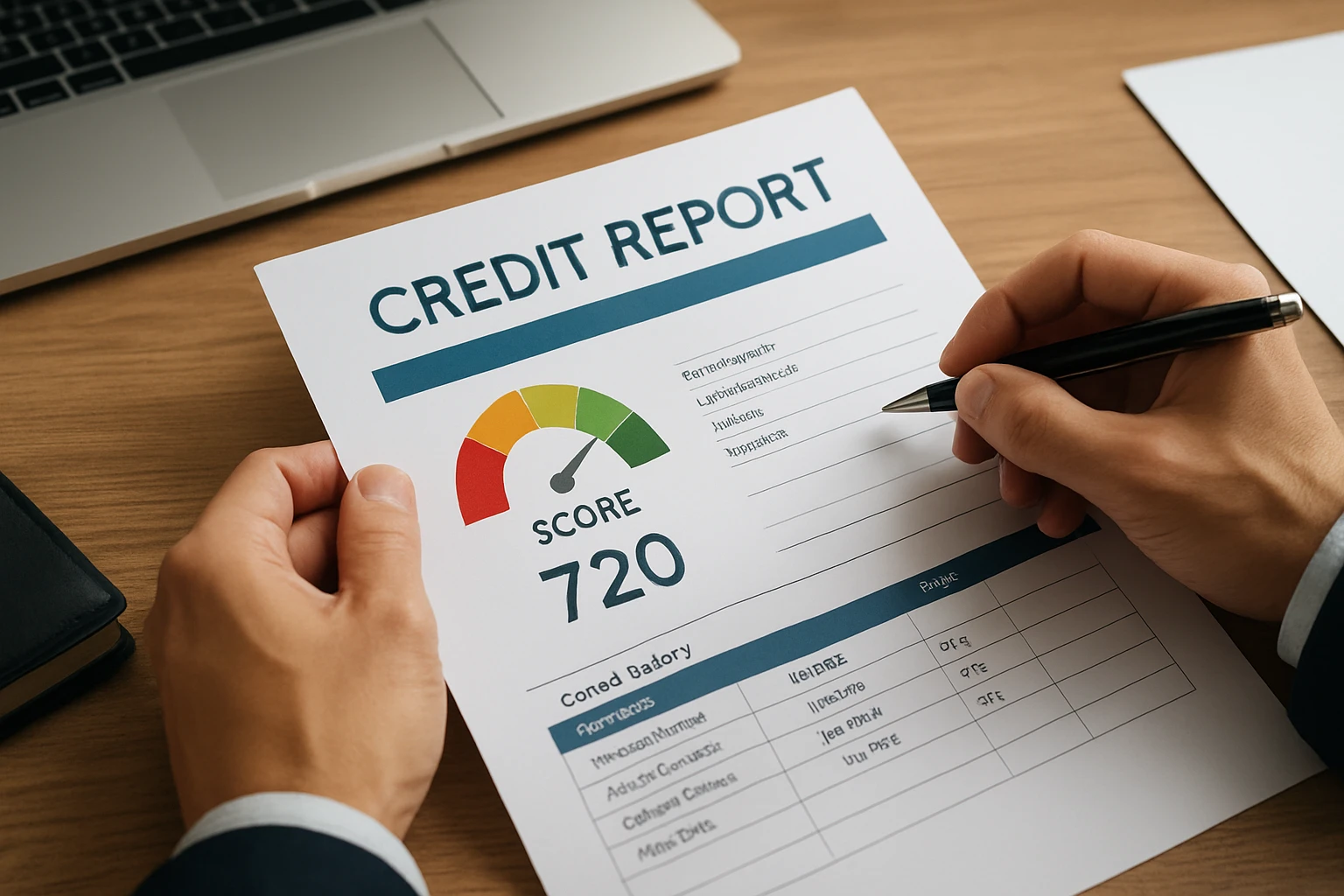
If the file itself is contaminated, rebuilding on top of it only slows everything down. I have seen people add a secured card, pay perfectly for months, and still get nowhere because the report was carrying accounts that never belonged to them.
Separate real debt from identity-theft noise
Look for unfamiliar accounts, addresses, employers, or name variations. A mixed file can happen when your data gets tangled with another consumer’s, especially if names, birth dates, or Social Security digits are similar. Identity theft can create the same kind of noise, but with higher stakes.
If a collector is contacting you about an account you do not recognize, save every letter. Under the FDCPA, consumers generally have a 30-day window after the initial collection notice to request validation. That will not fix your credit report by itself, but it helps you build a paper trail fast.
Freeze or lock files if you suspect new fraud
If you think new fraud is still happening, place a security freeze with Equifax, Experian, and TransUnion before you do anything else. A freeze is the free legal tool that stops most new credit from being opened in your name without your permission. Some companies also market “locks,” but the free freeze is the essential first move.
Do not try to outrun fraud by opening fresh accounts and hoping the score math works out. That usually creates more inquiries, more stress, and a messier file.
Dispute each bureau with matching proof
Each bureau may need its own dispute, and each one may ask for different supporting documents. Match the evidence to the error: a settlement letter for a wrong balance, a police or identity-theft report for fraud, or a copy of your ID and proof of address when a file is mixed.
Be specific. “This account is not mine” is weaker than “This TransUnion tradeline ending in 4821 is not mine; please compare the address and account ownership to the attached documents.” Precision wins time.
Do not try to outscore fraud with new accounts; clear the fraud first.
Step 3: Add One Starter Line of Positive Credit
Once the reporting is clean enough to trust, add one small, manageable source of positive data. Not three. One.
Choose a secured credit card or credit-builder loan
A secured credit card is one common way to rebuild credit after debt settlement. A credit-builder loan can also help. Both can create fresh payment history, and after settlement that new, recent data matters.
| Option | Best For | Watch For |
|---|---|---|
| Secured credit card | People who can handle one small monthly charge and pay it off | Annual fees, tiny limits, and whether all three bureaus get reports |
| Credit-builder loan | People who want a fixed monthly payment and less temptation to spend | Fees, payment size, and whether the account reports consistently |
Keep the first account small and easy to control
Your first new account should fit your real budget, not your ideal budget. If a $200 secured deposit feels comfortable and a $500 deposit feels tight, choose the smaller number. You are not trying to impress a scoring model. You are trying to build a streak of perfect payments.
A simple example works well: one streaming bill, one tank of gas, or one phone charge each month — then pay it cleanly. That is enough. Overbuilding too soon is one of the quickest ways to recreate the same stress cycle that led to trouble before.
Confirm that the lender reports to the bureaus you need
Before you apply, ask exactly which bureaus receive the account data. Some lenders report to all three; some do not. If your Experian file already looks healthier than your Equifax file, that detail matters.
If you are comparing products, do not get distracted by flashy approval language. Ask three boring questions: What are the fees? Which bureaus get reports? How easy is this payment to keep current every month?
Pick the account you can keep perfect, not the one with the highest limit.
Step 4: Automate Perfect Payments and Protect Your Payment History

After settlement, your payment history needs clean months stacked one on top of another. This is where recovery becomes less dramatic and more reliable.
Set autopay for at least the minimum payment
Autopay is not laziness. It is risk control. Set every rebuilding account to at least the minimum due so a bad week, a sick kid, or a travel day does not turn into a 30-day late mark.
Then review the account manually each month and pay extra if needed. Autopay protects the floor. Your monthly review protects the details.
Use reminders for variable bills and review dates
Some payments change every month. Think electric bills, cell phone plans, or a secured card you actually use for purchases. Put two reminders on your calendar: one a few days before the due date and another on the statement closing date if you are managing utilization closely.
A phone reminder, a paper planner, and a bank alert together work better than memory alone. This is not glamorous. It works.
Align due dates with payday when possible
If your paycheck hits on the 1st and 15th, call the issuer and ask whether your due date can move to the 3rd, 5th, or 18th. Many lenders allow it. That small scheduling change can reduce overdrafts, missed payments, and last-minute juggling.
Scores are designed to reward reliable repayment behavior over time. One new late payment can slow that recovery fast, especially when your file is already coming back from settlement.
Your rebuild gets easier when payment dates stop depending on memory.
Step 5: Lower Utilization and Avoid New Score Damage
Once your payment rhythm is stable, the next speed boost comes from restraint. Keep balances low. Avoid unnecessary applications. Check progress on a schedule, not in a panic.
Keep revolving balances low relative to limits
If your new secured card has a $300 limit, a reported balance of $25 tells a very different story than $275. Lower revolving balances generally support score recovery because they show that you are not leaning hard on the available credit.
That does not mean you must never use the card. It means you should control what gets reported. Many people pay before the statement closes so the balance that reaches the bureaus stays modest.
Avoid opening several new accounts at once
Too many new applications can create hard inquiries and shorten the average age of your accounts. If you are trying to rent an apartment, refinance a car, or prepare for a mortgage review, a burst of new credit can work against the cleaner story you are trying to tell.
Rebuilding fast often means declining tempting offers. That preapproved store card at checkout is not a plan. It is noise.
Track score changes monthly instead of daily
Review your reports and scores monthly, not every morning. Score movements can look different across FICO and VantageScore models, and the source you check may not match the model a landlord or lender uses. That is normal.
Monthly tracking gives you enough distance to see trends. Daily checking usually produces false urgency — and false urgency causes bad applications.
Rebuilding fast usually means doing less, not more.
Common Mistakes After Debt Settlement
The biggest setbacks usually come from wrong assumptions, not bad intentions. Debt settlement solves one problem. It does not erase every old mark automatically.
Assuming the debt settlement removed the history
Settlement resolves the account. It does not rewrite the months that came before it. If you had 90-day lates before the agreement, those late payments may still remain on the report as accurate history. Under the FCRA, most negative information can generally remain for up to seven years, and some bankruptcies can remain for up to ten years.
That sounds harsh, but it also gives you a realistic frame. You are not waiting for magic. You are building fresher, better information that can matter more as time passes.
Ignoring possible tax issues tied to forgiven debt
If part of the debt was forgiven, check whether there is any tax consequence. This is one of those details people skip because it does not feel like “credit repair,” yet it can create the next financial problem if ignored. If the amount is large or you have multiple settled accounts, talk with a tax professional before filing.
The credit file and the tax file are different systems. You want both clean.
Paying for credit repair instead of using free disputes
Disputing inaccurate credit report information is free. You do not have to pay someone to send a dispute letter you can send yourself. Under the Credit Repair Organizations Act, companies cannot lawfully do anything for your file that you are barred from doing on your own, and no one can legally remove accurate negative information just because you paid a fee.
Be extra skeptical of shortcuts: CPN offers, “new file” pitches, or anyone claiming they can erase accurate debt history on demand. Paid help is not automatically worthless, but a fee is not the same thing as a repair plan.
Do not confuse a paid service with a real repair plan.
Fast recovery after settlement comes from accuracy first, one good account second, and spotless payments after that.
If you came here wondering how to rebuild credit after debt settlement, start by cleaning the reports, then let fresh positive history do the heavy lifting. No tricks. No rush of applications. Just organized follow-through.
Which line on your reports will you verify first tonight — the settled balance, the late-payment history, or the first starter account you can manage without strain?
Credit Score Repair Made Clear
Credit Score Repair gives Americans plain-English basics, range explanations, dispute steps, identity-theft tips, and debt recovery strategies after settlement.
Educational disclaimer: This article is for educational purposes only and is not legal, tax, or financial advice. You can dispute credit report errors yourself for free, and paid services cannot lawfully remove accurate information from a credit report. If your situation involves taxes, identity theft, lawsuits, or collection activity, speak with a qualified attorney, tax professional, or nonprofit housing counselor.
Generated on SEOPro AI