
The Instant Credit Card Approval for Fair Credit Checklist
You are at your kitchen table with your credit reports open, a stack of bills beside your laptop, and one application window waiting for your next click. The room is quiet except for the hum of the fridge. If you want instant credit card approval for fair credit, stop for a minute. The application is not the first move. It is the last test of what Equifax, Experian, and TransUnion already say about you.
Most fair-credit denials are not mysterious. They usually come from things you can spot in advance — a frozen bureau file, a wrong late payment, an address mismatch after a move from Phoenix to Tampa, or a card offer that says “easy approval” but hides a punishing APR. I have seen applicants with decent income get kicked to manual review over one stale collection for less than a cell phone bill.
That is why the smartest prep looks a lot like credit repair and file review. The Consumer Financial Protection Bureau and Experian both center their education around understanding your reports, disputing inaccuracies, and rebuilding with facts instead of wishful clicking. Do that first. Then pick the right card, apply once, and verify the terms before you spend.
Check Your Credit File Before You Apply
Treat the application as the last step, not the first. A lender does not grade your optimism. It grades the file it pulls.
Watch This Helpful Video
To help you better understand instant credit card approval for fair credit, we’ve included this informative video from Cal Barton. It provides valuable insights and visual demonstrations that complement the written content.
Pull Every Bureau Report and Look for Mismatches
Experian recommends getting credit reports from all three bureaus, and that advice holds up in practice. Some card issuers lean on Experian. Others prefer TransUnion or Equifax. You often will not know which file gets pulled until after you apply, so a clean report at one bureau does not protect you if another still shows a wrong collection or an old address.
Start with your free reports at AnnualCreditReport.com. Read them side by side. Look at names, suffixes, addresses, employers, account status, balances, payment history, and hard inquiries. Not every mismatch means error — a $27 balance difference can come from statement timing — but identity fields and derogatory marks should not tell three different stories.
| What to Review | Why It Matters | What to Do Before Applying |
|---|---|---|
| Name, address, employer | Mismatches can trigger identity checks or a pending decision | Update or dispute incorrect personal information at each bureau |
| Account status and balances | A card marked past due or over limit can tank an otherwise fair file | Confirm current status and wait for recent payments to post if needed |
| Collections and charge-offs | Surprise negatives often cause denials or higher-risk pricing | Dispute inaccuracies and validate unfamiliar debts before applying |
| Hard inquiries and freezes | Fresh inquiries and blocked access can slow or stop approval | Limit new applications and unfreeze the needed bureau in advance |
- Pull all three reports, not just the bureau tied to your favorite score app.
- Flag duplicate collections, wrong late dates, and accounts you do not recognize.
- Check whether a recent payoff or paydown has actually updated.
- Save copies or screenshots so you can track corrections bureau by bureau.
Dispute Errors, Fraud, and Surprise Collections First
Experian also points readers to checking their reports and filing disputes. Do that before you volunteer for a hard inquiry. Under the Fair Credit Reporting Act, a credit bureau generally has 30 days to investigate a dispute, with up to 45 days in certain situations. If the issue is real and material — wrong late payments, a bogus repossession, an account mixed in from someone with a similar name — fix it first.
Pay close attention to surprise collections. Medical bills, utilities, and telecom balances show up after moves more often than people expect. If a debt collector contacts you about something unfamiliar, the Fair Debt Collection Practices Act gives you a 30-day validation window after first contact. Use it. And if an old negative item has aged past the typical seven-year reporting limit, or a bankruptcy has lingered past 10 years, dispute it as obsolete.
- File disputes with the bureau reporting the error and keep your records organized.
- Report identity theft signals fast — unfamiliar accounts, wrong addresses, or sudden fraud alerts.
- Request debt validation when a collector is chasing a balance you do not recognize.
- Wait for the result when the disputed item could clearly affect a lending decision.
Decide Whether a Score-Building Tool Helps or Distracts
Some tools can help. Some just feel productive. Experian presents Experian Boost as a way to raise scores instantly, and that may help the score you see if utility or telecom payments get added. But lenders do not all use the same scoring version. A bump on one consumer-facing score may not change the underwriting call on a specific card. That is why I treat score tools as optional polish, not structural repair.
If your file still has obvious errors, a forgotten freeze, or a fresh collection, do not start with cosmetic moves. Fix the underlying record. If you are earlier in the process and need to establish credit from scratch, a starter path such as a secured card, a credit-builder loan, or a tool like Experian Go may fit better than another unsecured application.
Do not apply until the file is clean enough to survive a manual review.
Match the Card to Fair-Credit Reality for Instant Credit Card Approval for Fair Credit
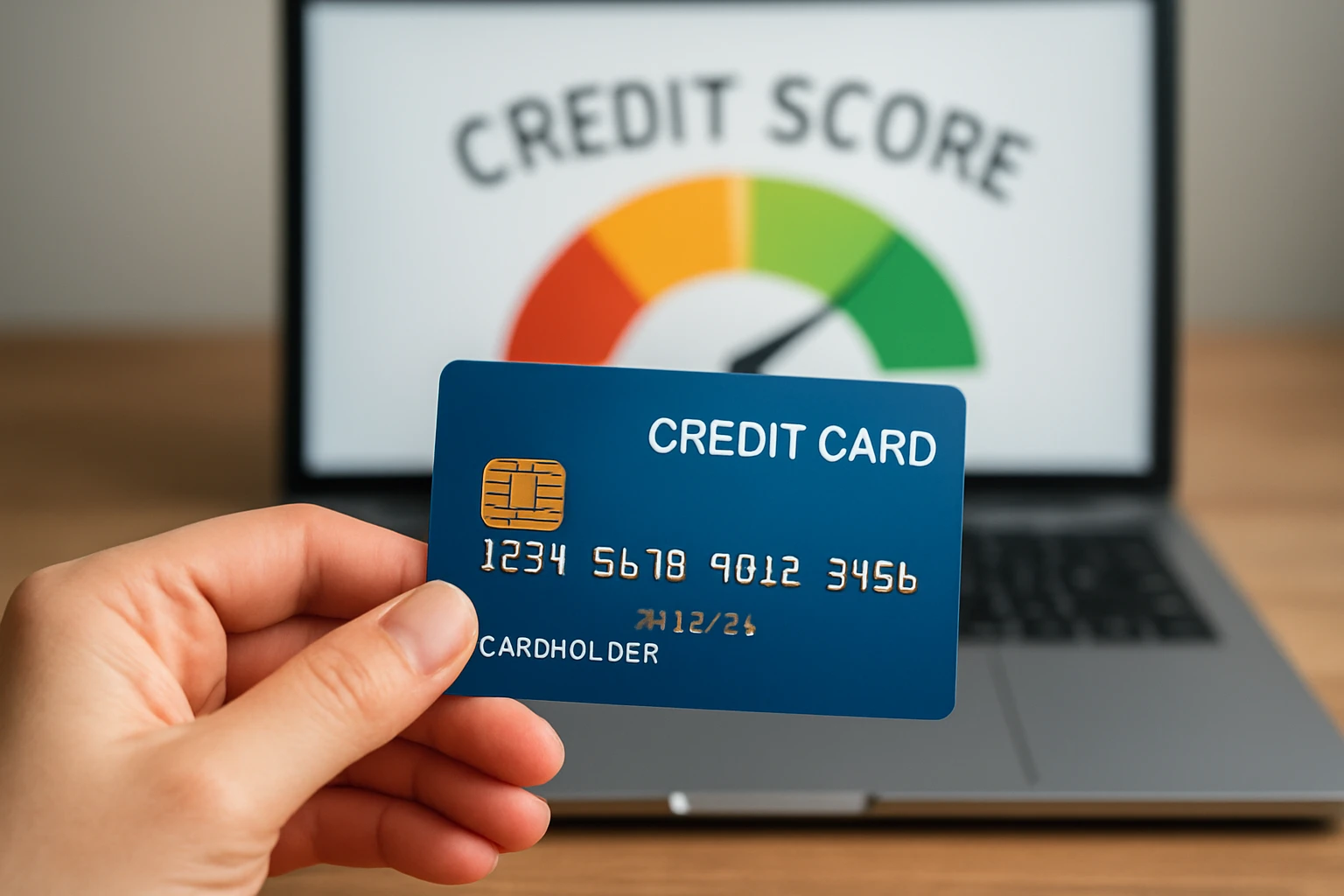
Now deal with the offer itself. Speed matters, but fit matters more.
Confirm the Issuer Accepts Limited or Fair Credit
CompareCards lists fair-credit cards with “Limited / Fair” shown in the credit-needed field. That is the kind of plain labeling you want. Fair credit sits in a gray area between weak and solid, and the exact range changes depending on whether a lender looks at FICO or VantageScore. So do not assume that “average,” “rebuilding,” and “fair” all mean the same thing. Read the actual approval language.
Also notice what the offer is not saying. If a card page shouts about fast decisions but says almost nothing about who it is for, slow down. A clearly labeled Mastercard, for example, can be useful because network acceptance is broad, but the logo alone does not make the underwriting friendlier or the terms better.
- Look for a stated credit-needed range such as limited or fair.
- Prefer offers that are clear about whether the card is secured or unsecured.
- Check whether the network fits your actual spending — gas, rent-related payments, travel, or online bills.
- Ignore vague “all credit welcome” language unless the full pricing is easy to find.
Compare Annual Fees Against the Value of Instant Approval
CompareCards highlights at least one fair-credit offer with a $0 annual fee. That is a good reminder: fast approval does not require an expensive card. Plenty of subprime-style products try to sell relief and then charge for it with annual fees, monthly maintenance fees, or thin benefits. If you are paying just for the chance to get a “yes,” make sure that yes solves a real problem.
Sometimes an annual fee is still worth considering. If the issuer reports consistently, offers basic account tools, and gives you a practical first line of revolving credit, the card may earn its spot. But speed by itself is not a benefit. It is just speed.
| Offer Field | What You Want to See | Why It Matters |
|---|---|---|
| Credit Needed | Clearly stated as limited or fair | Better odds of fit than a generic marketing promise |
| Annual Fee | $0 or a fee justified by clear value | Cheap access beats costly access when you are rebuilding |
| Rewards Rate | Simple terms, even if rewards are minimal or none | Rewards are secondary if the card is mainly a rebuilding tool |
| APR | Fully disclosed and understandable | A high APR can erase any convenience if you carry a balance |
| Network | Major brand such as Mastercard | Wide acceptance helps if this becomes your daily-use card |
Read the APR and Rewards Language Before You Click Submit
CompareCards describes one fair-credit card as a non-rewards product with a high interest rate. That combination is common. You may find no annual fee and broad acceptance, but not much else. That can still be perfectly fine if your plan is to pay in full every month and build positive history. It is a much worse deal if you think you will carry even a modest balance.
Read the APR, grace-period language, fee schedule, and any note about a welcome offer or the absence of one. For many fair-credit cards, “instant approval” is the headline and “high APR” is the footnote. Read the footnote first.
A fast decision is not the same thing as a cheap card.
Submit the Application With Zero Friction
Once you have the file cleaned up and the offer chosen, make the lender’s job easy. Friction creates delays. Delays create reviews.
Use the Same Name, Address, and Income Details Across Forms
Type your legal name exactly as it appears on your identification and credit file. If your reports say “Robert J. Thomas Jr.” and the application says “Bob Thomas,” you may survive that. You also may get kicked into verification. Same story with address formatting. If you moved recently, do not bounce between “Apt 4B” and “#4B” across forms, accounts, and uploaded documents.
Be just as careful with income. Use accurate current income that you can support if asked. Do not round $41,200 into $50,000 because it looks cleaner. A fair-credit application works best when every data point lines up on the first pass.
- Use your legal name, current address, and stable phone number.
- Enter your housing payment honestly; issuers compare risk, not aspiration.
- Report income consistently across the application and any follow-up questions.
- Check every field before you submit — one typo can trigger a detour.
Avoid Half-Finished Applications and Duplicate Submissions
CompareCards describes the application flow for some fair-credit offers as secure and immediate online. Good. Treat that as a reason to apply when you have uninterrupted time, not when you are in line at Target. A half-finished session, a browser crash, or two frantic retries can create duplicate submissions or fraud flags.
There is another issue. Credit card inquiries generally do not get the same rate-shopping treatment that mortgage and auto inquiries can receive. If you apply for three cards in a week, a lender may simply see three recent attempts at new revolving credit. That can look riskier than one clean shot.
Keep Your Documents Handy in Case the Issuer Asks for Verification
Even when the application is fast, the lender may still ask for proof. Keep a government ID, recent pay stub, bank statement, or utility bill ready. If you have a fraud alert on file, expect extra identity questions or a verification call. Pending is not the same as denied. It often means the lender wants one more piece of the puzzle.
I have watched solid applications stall for 72 hours because the applicant could not quickly prove a new address after a move. Have the paperwork nearby. You want the underwriter to spend time confirming you, not waiting on you.
One clean application beats five rushed ones.
Verify the Approval Details Before You Swipe

The email says approved. Good. You are not done yet.
Check Whether the Approval Is Instant, the Card Number Is Instant, or Both
Some fair-credit offers emphasize immediate online approval, but that does not always mean immediate use. You may get an instant decision and still wait days for the physical card. In other cases, you may receive a card number right away or be allowed to add the account to a digital wallet. Those are very different milestones, and people mix them up all the time.
| Milestone | What It Actually Means | What to Confirm |
|---|---|---|
| Instant Decision | The issuer approved or declined the application right away | Save the approval details and read the initial terms |
| Instant Account Access | You can log in and manage the account the same day | Set up autopay, alerts, and contact preferences |
| Instant Card Number | You can use the account before the plastic arrives | Check whether spending is limited until activation |
| Physical Card Delivery | The card is mailed and ready for normal activation | Watch for timing, shipping method, and activation steps |
Confirm the Starting Limit, APR, and Fee Schedule
CompareCards highlights annual fee, welcome offer, rewards rate, and credit needed as core review fields. After approval, add starting credit limit and the full fee schedule to that list. A $300 limit may still help you build history, but it changes how easy it is to keep your reported balance low. A $0 annual fee sounds great until you notice other charges later in the account agreement.
Read the APR, late-fee terms, any penalty pricing language, and any feature you assumed existed. If you thought the card came with rewards, verify the rate. If you thought it had no fee, confirm that on the actual approval paperwork, not just the headline ad.
- Screenshot the approval page and save the welcome email.
- Read the cardmember agreement before the first transaction.
- Check whether balance transfers, cash advances, or foreign transactions carry separate fees.
- Make sure the limit fits your intended use so you do not max it out in week one.
Set Autopay and Alerts Before Your First Purchase
Do this before you buy coffee, not after. Set autopay for at least the minimum due, and if your cash flow allows it, consider autopay for the full statement balance. Turn on alerts for statement closing, payment due dates, big purchases, and unusual activity. That one five-minute setup can prevent the late payment that wipes out the whole point of getting approved.
This is also where you define the card’s role. Is it a gas card, a recurring-bills card, or an emergency-only card? Pick one. Fair-credit cards are most helpful when they are boring, predictable, and paid on time.
If the decision is instant but the card is not, do not treat the two as the same milestone.
Avoid the Common Misses That Block Fair-Credit Approvals
Most setbacks are preventable. They come from timing, file problems, or choosing the wrong tool for the job.
Fix Identity-Theft Signals and Forgotten Freezes
Experian’s consumer resources point readers to freezing credit at all three bureaus and to support topics such as fraud alerts and disputes. That matters here. A freeze is great when you need protection. It is terrible when you forget it is still active and the issuer cannot pull your report. I have seen that happen after a breach scare, a move, and one rushed application. Instant approval disappeared in about 10 seconds.
If you see identity-theft signals — unknown addresses, fraudulent accounts, or accounts opened during a deployment, hospitalization, or chaotic move — stop and repair first. A new card does not solve a compromised file. It gives a messy file one more chance to create problems.
- Check all three bureaus for freezes before you apply.
- Keep fraud-alert phone numbers current so verification calls reach you.
- Document identity-theft disputes carefully and follow through bureau by bureau.
- Do not treat suspicious activity like a minor inconvenience.
Do Not Stack Multiple Applications in the Same Week
When the first application does not go your way, your worst move is often the next four applications. Each one can add another hard inquiry. Each one can signal urgency. And each one can push a borderline file farther away from approval. If you get denied, wait for the adverse action notice and read it. Lenders usually tell you whether the problem was too many recent inquiries, high balances, limited history, or derogatory marks.
This is also where you should ignore junk advice. Do not chase CPNs, “sweep” scams, fake tradeline promises, or any other shortcut that asks you to disguise your identity or misstate your file. Under the Credit Repair Organizations Act, you can do every legitimate repair step yourself for free. If your file is thin rather than damaged, a secured card, a credit-builder loan, or a starter program such as Experian Go may be a better next move than another denial.
Choose a Card That Fits Mortgage, Renting, or Veteran-Credit Goals
The right card depends on what you need the card to do next. If you are trying to qualify for a mortgage, ask your loan officer whether opening a new revolving account helps your timing or complicates it. If you are trying to rent an apartment in Dallas or Denver, predictable payments, a low fee structure, and broad acceptance may matter more than points. If you are a veteran or active-duty household that has moved several times, fix address mismatches first — those are common and surprisingly disruptive.
Think in use cases, not slogans:
- For mortgage prep, avoid new debt you cannot explain and keep balances controlled.
- For renting, favor simple terms, low or no annual fee, and on-time autopay.
- For identity-theft recovery, prioritize file accuracy before any new application.
- For long-term rebuilding, choose accounts you can keep open and manage cleanly.
Sometimes the smartest approval strategy is to stop applying and repair first.
Clean the file, match the card, apply once, and verify the terms before you spend.
That is the safest route to instant credit card approval for fair credit — and the best way to avoid swapping a quick yes for a costly mistake. Which part of your file would you fix before you let the next lender see it?
Sharpen Your Score Plan With Credit Score Repair
Credit Score Repair gives Americans plain-English score ranges, report guidance, dispute steps, and practical education for rebuilding, protecting, and managing stronger borrowing habits.
This material is for educational purposes only and is not legal, tax, or financial advice. Under the FCRA, FDCPA, and CROA, you can review your reports, dispute inaccurate information, validate debts, and handle credit-repair steps yourself at no cost. No approval, deletion, or score increase is guaranteed, and results vary by lender, timing, and the facts in your credit file.
Generated on SEOPro AI